How to Breastfeed Appropriately
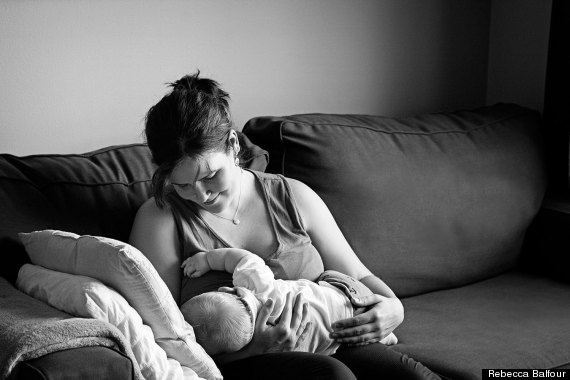
So you've decided to breastfeed. Fantastic! Breastfeeding is a wonderful way to nourish your baby while establishing early bonding. Unfortunately, breast milk comes out of breasts so there are a few ground rules that we need to cover.
As you know, (female) modesty is a highly protected value in modern society. Unless you're a magazine cover model or in a music video, exposing your female udder flesh is entirely inappropriate. Science has proven that breasts are basically large vaginas. Only you and your partner should ever see them. Just because your breast-ginas are full of milk, doesn't mean you get to wave them around.
"I don't expose much when I breastfeed." This is a common excuse made by exhibitionist mothers. Just knowing that your nipples may become visible at any time is offensive and a temptation to married or newly engaged men.
Real life stories:
"I saw a woman breastfeeding in a park and was overcome with desire. I left my wife the same day." - John, 34, Nebraska
"I was a married man with eight kids. Last month I saw a woman nursing her infant at a park. I am now married to her." - Luke, 45, South Dakota
"Two years ago I was a successful business executive handling important transactions. Then I saw a breastfeeding mother. I became obsessed with nipples and lost my job. I can't make ends meet." - Anthony, 45
None of us would urinate in public (sober), so please show us the same courtesy and release your mommy nectar out of sight.
Note: Peeing in public and breastfeeding in public are identical because in both cases liquid is coming out. Crying in public is different because it's happening above the neck. If you can breastfeed out of your eye sockets, be my guest.
Here are a few tips that mothers should and need to adopt to help the rest of us feel comfortable.
Tip #1: Use a cover. Every time. There are many fancy ones on the market. Damask. Lace-trimmed. Or how about a swaddling cloth (if it's good enough to warm the baby Jesus, it's good enough for your kid)? Statistics show that human beings love being in confined spaces. Babies are on their way to becoming full humans, so this applies to them as well. I personally eat many of my meals under a loosely draped fitted sheet in my bedroom and find it quite enjoyable.
Please do not use summer as an excuse to flash your flesh-toned milk bags. Just last week I ate an entire Italian sub under a handmade quilt in 90 degree weather skin-to-skin with a close friend to simulate summer breastfeeding. Were we hot? Yes. Were we uncomfortable? Yes. Did one of us briefly lose consciousness? Yes. Did we subject anyone to seeing nipples? NO.
Do not be fooled, the importance of air circulation has been exaggerated by politicians. Ten out of 10 babies reported loving the sensation of breathing repeat CO2. There are women who can breastfeed without anyone knowing what they're doing. If they can do it, so can you because all babies are the same.
If you have a rebellious/bad child who pulls your cover off in a desperate attempt to breathe fresh air and see the world around them, consider some home training. It's your job to teach them right from wrong. Should your original sin infant not respond to discipline and still reach out for new oxygen, place two little straws in their nose scuba-style so that cool air can be retrieved from under a burlap cover without making us all barf from the sight of your boob flesh.
Care about decency? Go the extra mile and prevent wind from flying up and exposing your naked nipples by sewing small weights into the corners of your nursing cover.
Tip #2: Use a bathroom. Who doesn't love a public restroom? They're full of exotic scents and sounds! The next time your needy baby starts fussing for a taste of chest drippings, run to the nearest stall or city outhouse.
Nursing standing up while trying to avoid bacteria and holding a wriggling child has the added benefit of strengthening your core muscles. That postpartum tummy will be gone before you know it, making you more attractive to the general public. It's summer, after all -- bikini season!
No hook for the diaper bag? Put it on the floor or in the sink. When you get home, wipe it down with a bleach and water solution to remove any fecal matter.
If you've used your uterus more than once and have a second, or worse, third child in tow, ask the critters to join you in the stall for their safety. It's like a party! Don't worry, if you've raised them right they won't touch anything.
Considerate babies nurse for between 10-15 minutes, so you'll be out of there before you know it. If you've been cursed with a baby who nurses for 20 minutes or more at a time, cut them off when you see fit. That will teach them to speed things up. Keep track of their best times on your iPhone and give them small rewards (like a hug or kiss on the temple) for shaving off minutes.
Children are meant to be seen and not heard, but if you're rude enough to bring a baby to a public eatery, it's your responsibility to leave the table for the bathroom to nurse. Your meal will be waiting when you return. If your appetite is affected by the smell of light sewage, consider the fantastic weight-loss ramifications and be grateful. You're going to look great in that bikini!
The message is simple: whatever you are doing in public, drop it to move to a private area. Shopping? Return to your vehicle. At a remote park? Find an abandoned train car. Think about others.
Tip #3: When you leave the house, switch to bottles. If your baby hasn't used them before, shame on you for not preparing your infant for the real world. Everyone knows that it is very simple for babies to switch between the breast and bottles and won't at all impact his or her ability to continue breastfeeding in a socially appropriate setting (your bedroom in the dark).
Pumping breast milk is simple, fast and easy. Capable moms know how to squirt out a gallon of milk in under seven minutes. When you need to leave the house, just grab some of your fridge emissions! If your breasts become painfully engorged or hard to the touch from skipping feedings, take comfort in knowing that you're doing this for mankind's comfort level.
Formula is also available and not expensive.
Bottles also give other people a chance to feed the baby. Stop being selfish and hogging all of the feedings with your teats. Having a baby is about letting other people feel good. Pass it around like a football and watch the compliments roll in!
If your baby refuses the bottle, just keep pressing. You'll break their spirit eventually. If not, see tip #4.
Tip #4: Stay home. It would be easier for you and all of us if you just spent the day in your private dwelling. Not forever. Just until your baby learns to take a bottle or eat food that doesn't come out of your privates. There's lots to do in a home: television, hanging out in the backyard (don't nurse there unless you have a high enough wall -- again, RESPECT), cooking, cleaning, laundry and of course, Facebook. Please don't post photos of yourself breastfeeding on the Internet. The last thing anyone on the Internet wants to see are female breasts in an innocent context. We find this disgusting.
Tip #5: Get some morals. Do you have sex in public? No. Then why would you pull out your SEX BREASTS for your baby in public? Just because something is natural, doesn't mean we all want to see it. Yes, we will tolerate a celebrity nip slip or areola display. Yes, there are breasts splashed all over magazine racks and on television bouncing up and down to pop music, but that's different. We're OK with boobs if money has been exchanged. Has your cheap baby paid you? No? Then wrap it up.
In conclusion, breastfeeding in public is for lazy, exhibitionist, thrill-seeking, husband-stealing mothers who have nothing better to do than to make the rest of us shrivel in disgust. So cover it up. Love, Us.