Welcome!

Welcome to my Doula Blog! I hope you find it interesting and informative.

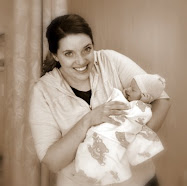
My name is Natalie. I am a wife, a mother of almost five boys, a doula, and a Hypnobabies Instructor! I'm passionate about childbirth and hope to help women realize the power that is in them to birth more normally and naturally. It's my goal to help women feel confident and comfortable during pregnancy, labor, and delivery. Yes, it is possible! It's also amazing, incredible, wonderful, empowering, and life changing.

As a doula, I am a trained professional who understands and trusts the process of birth. I provide continuous care for the laboring mother and her partner. Studies have shown that when doulas attend births, labors are shorter with fewer complications. I attend to women in labor to help ensure a safe and satisfying birth experience in both home and hospital settings. I draw on my knowledge and experience to provide emotional support, physical comfort and, as needed, communication with the other members of your birth team to make sure that you have the information that you need to make informed decisions in labor. I can provide reassurance and perspective to the laboring mother and her partner, make suggestions for labor progress, and help with relaxation, massage, positioning and other techniques for comfort.

Feel free to contact me at doulanataliesue@gmail.com.
Thanks for stopping by!

Pages

Showing posts with label Cesareans. Show all posts

Wednesday, June 15, 2011

Hypnosis birth preparation cuts caesarean rate

Hypnosis birth preparation cuts caesarean rate

Embargo until March 21
As the NHS is funding research into the use of hypnosis and birth (the SHIP tirial), a detailed survey of more than 1250 women who learnt self hypnosis as part of their birth preparation, indicates that these techniques will lead to a significant reduction in caesarean sections. The findings from the online survey are being presented at the 1st World Congress of Obstetrics, Gynaecology and Andrology (WCOGA 2011) to be held at the Queen Elizabeth II Conference Centre, London, during March 20-23.

The results of the survey of 1251 mothers, including 853 first time mums, who listened to the Natal Hypnotherapy CDs during their pregnancy, indicates that women using these techniques are likely to have a more positive, less painful, often less interventionist birth with a significantly lower caesarean rate with only 15% requiring a caesarean compared with the national rate of almost 25%.

A staggering 89% said using the techniques had enabled them to overcome any fears connected with giving birth; 72% reported feeling calm during the birth with 61% feeling able to manage the pain in labour. Overall, 95% of women felt they had benefited from learning self hypnosis as a way to help them have a more positive birth experience.

As the popularity of hypnosis in birth continues to grow in the UK, it is a significant move forward for the NHS to back clinical trials into the use of these techniques as a low cost, safe and practical antidote to the drug-dependent labour management culture that has developed in the UK over the last fifty years.


- ends -
Notes to Editors

1. To receive a preview copy of the Natal Hypnotherapy CD and book, to arrange an interview with Maggie Howell or for birth and midwives testimonials, case studies and Natal Hypnotherapy research, please email: maggie@natalhypnotherapy.co.uk, Call 07710 019068 or 01428 712615 and/or visit
www.natalhypnotherapy.co.uk.

2. The full paper A RETROSPECTIVE SURVEY ON THE PSYCHOSOMATIC AND PHARMACOLOGICAL OUTCOMES OF WOMEN USING NATAL HYPNOTHERAPY CDS DURING PREGNANCY will be presented by Maggie Howell on March 21st at the 1st World Congress of Obstetrics, Gynaecology and Andrology (WCOGA 2011) – Psychosomatic and behavioral perspectives on clinical controversies to be held at the Queen Elizabeth II Conference Centre, London.

3. Over 2,300 midwives and birth professionals across the UK are now recommending Natal Hypnotherapy techniques. Hypnotherapy has been an accepted therapeutic practice recognised by the British Medical Association since 1955.

4. Natal Hypnotherapy was awarded the Practical Parenting ‘Pregnancy Product of the Year’ award for its CDs and the Practical Parenting ‘Editors’ award in 2006. The CDs reached the final of these Pregnancy Product awards in 2009 and 2010.
5. Other CDs in the Natal Hypnotherapy range include:
The IVF Companion Home birth preparation* Fast post natal recovery*
Prepare to conceive Prepare for a Caesarean* Breastfeeding companion
Overcoming Morning Sickness Hospital birth preparation* VBAC preparation
Pregnancy Relaxation* Relaxation and Stress Management

*denotes twins version available

6. Natal Hypnotherapy was founded in 2001 by Clinical Hypnotherapist and doula, Maggie Howell (d. Hyp. C. Hyp, LHA,UK HypReg), following the birth of her first child in which she used hypnotherapy techniques which she then went on to develop into the Natal Hypnotherapy product range following further research with mothers and antenatal groups. Maggie has since gone on to have four more children.

Monday, June 13, 2011

Too Many C-Sections: Docs Rethink Induced Labor

By TIFFANY O'CALLAGHAN Monday, Aug. 02, 2010

Click here to find out more!
LWA-Stephen Welstead / Corbis
The rise in cesarean-section deliveries in recent years has been characterized by some as a key indication of the overmedicalization of childbirth. While the procedure undoubtedly saves lives and leads to better health outcomes for mothers and infants who face problems during pregnancy and labor, many experts say the procedure is being performed too often, and in many cases for nonmedical reasons, putting healthy women and babies at undue risk of complications of major surgery.
The rate of C-sections has reached more than 31% in the U.S., a historical high, according to 2007 data from the American College of Obstetricians and Gynecologists (ACOG). The reasons for the increase are many and have been widely discussed: the rising rate of multiple births, more obesity in pregnant women, the older age of women giving birth. In fact, C-sections have become so common that many women may have an inflated sense of safety about them. "For the most part, moms and babies go through the process healthy and come out healthy, so maybe there's this sense that we're invincible," says Dr. Caroline Signore of the Eunice Kennedy Shriver National Institute for Child Health and Human Development.(See pictures of pregnant-belly art.)
But C-section carries all the attendant risks of major surgery; and data show that compared with vaginal birth, cesarean delivery increases the odds that a mother will end up back in the hospital after birth with complications such as bleeding or blood clots.
Now obstetrics experts are actively seeking ways to drive down the number of C-sections. On July 21, the ACOG issued new guidelines recommending that hospitals allow most mothers who desire vaginal birth after cesarean, or VBAC, to attempt a trial of labor, including some mothers who are carrying twins or have had two prior C-sections. Despite studies showing VBAC to be safe for most women — ACOG data suggests that 60% to 80% of women who attempt VBAC will succeed — many hospitals have urged women to undergo a repeat cesarean over the past decade, largely to avoid medical risks and malpractice suits.(Read how postpartum depression can strike fathers.)
Another factor contributing to high C-section rates is the increase in induced labor, especially between 37 weeks and 38 weeks of gestation — a period obstetricians describe as "early term." (While any birth between 37 weeks and 41 weeks is considered full term, some experts distinguish the earlier period.) The use of labor induction in the U.S. has risen from less than 10% of deliveries to more than 22%, between 1990 and 2006, according to data from the Centers for Disease Control and Prevention, and research suggests that induced labor results in C-sections more often than natural labor. A study published in the July issue of the journal Obstetrics & Gynecology found that among more than 7,800 women giving birth for the first time, those whose labor was induced were twice as likely to have a C-section delivery as those who experienced spontaneous labor.
The study's lead author, Dr. Deborah Ehrenthal of Christiana Care Health System in Newark, Del., says that she was not surprised to see an association between induction and risk of C-section, since previous studies had come to the same conclusion. But Ehrenthal says she was surprised by the high rate of induction overall. In her study of ethnically and socioeconomically diverse mothers delivering before 41 weeks' gestation, who did not have pregnancies complicated by breech presentation, 44% of women had their labor induced.(Read about the risks of late preterm births.)
The rate is significant because ACOG guidelines, which have been in place since 1982, recommend against elective inductions in the early term, or anytime before 39 weeks. Research shows that after 41 weeks' gestation, at which point it is standard policy to induce labor, it may lower the risk of medical complications for mother and baby — including the risk of stillbirth — and even decrease the likelihood of C-section delivery, but those same effects are not seen in women who induce labor before the 41-week mark.
Medical reasons for earlier induction may include advanced size or lack of proper growth of the fetus and maternal issues like diabetes. But in an editorial accompanying Ehrenthal's paper, Signore also suggests that the high rate of early-term induction may reflect lifestyle choices: health care providers' and new parents' desire to control the timing of delivery. "Many women believe that delivering a few weeks early is just as safe as delivering on the projected due date and may request delivery for any number of reasons of comfort or convenience," Signore writes. "However, we must remember that incautious use and timing of interventions — particularly in elective cases — can lead to unnecessarily poorer outcomes for women and newborns."
Among the women whose labor was induced in Ehrenthal's study, nearly 40% of cases were categorized as elective. In other words, there was no pressing medical indication for induction. Extrapolating from the study findings, Ehrenthal suggests reducing the use of elective labor induction could lower the national C-section rate by as much as 20%.
Several hospitals have already begun reducing medically unnecessary induction as a way to lower the rate of cesareans. In 2006, the Magee-Womens Hospital in western Pennsylvania began limiting the pool of women eligible for elective inductions to those delivering after 39 weeks. The hospital also established stricter protocols for elective induction in women after 39 weeks — insisting on high levels of cervical "ripeness" as measured by the standard Bishop score before induction — and prohibited other labor-hastening efforts, such as the use of cervical ripening agents. Additionally, the hospital instituted a new scheduling system requiring physicians to document specific reasons for induction when used.
Researchers found that under the new policy the overall induction rate dropped 33% and the rate of elective inductions fell by roughly the same amount. What's more, the total number of C-sections among first-time mothers who underwent elective induction dropped 60%. The results of the Magee-Womens study were published in April 2009 in the journal Obstetrics & Gynecology.
If a relatively simple policy shift based on medical evidence can successfully cut the rate of induced labor and C-sections at a single hospital, experts say similar changes applied broadly may help lower the rate of C-sections on a national level.
But as with the new guidelines regarding VBACs, decisions about labor induction and other issues surrounding childbirth must be shared by women. Patients should be informed and included in the decisionmaking process, Ehrenthal says. "Unlike the decision to do an emergency C-section where there's no time to talk, usually there is time to have a discussion about induction," she says.


Read more: http://www.time.com/time/health/article/0,8599,2007754,00.html#ixzz1PApJAvQV

Wednesday, April 21, 2010

Reducing Cesarean Rates

In Effort to Limit C-Sections, Two Methods Yield Different Results on Staten Island
By SUSAN DOMINUS
Published: April 19, 2010

This is a tale of two hospitals.

One has the highest rate of Caesarean sections in the city, the other the fourth lowest. They represent some of the city’s obstetric extremes, yet they sit just five miles apart on Staten Island, serving similar populations.

So what accounts for the difference?

Dr. Mitchell A. Maiman, at the computer screen, with a patient on Monday. He does not offer elective Cesarean sections.

In large part, determination, which Dr. Mitchell A. Maiman, the chairman of the obstetrics and gynecology department at one of the two, Staten Island University Hospital, has in ample supply. As New York City’s C-section rate has soared in recent years — by 36 percent, between 2000 and 2007, according to the New York State Department of Health — Dr. Maiman has kept his hospital’s rate around 23 percent of all births.

In 2008, according to numbers released by Choices in Childbirth, an advocacy group for pregnant women, working with state statistics, Staten Island University Hospital’s rate went down, while the rate at the other hospital, Richmond University Medical Center, went up again, to 48.3 percent. That made it, for the fifth consecutive year, the hospital with the highest C-section rate in the city. (The National Center for Health Statistics reported that the Caesarean rate reached 32 percent in 2007.)

Caesarean births are generally considered more prone to complications than natural births, so most hospitals at least pay lip service to their devotion to reducing them. But very few have pulled it off. What seems to have made the difference for Dr. Maiman’s department is building that goal into policy, even when it is unpopular with doctors — even, sometimes, when it may be unpopular with patients.

To start, Dr. Maiman and his colleagues do not allow unnecessary inductions for first-time pregnancies at any point before the 41st week, since they are a main cause of C-sections. They also do not allow C-sections for no reason other than the mother wants one.

C-sections are thought to be relatively lawsuit-proof, and they also let everyone go home on time. But such conveniences do not inform Dr. Maiman’s thinking. “You have to draw the line somewhere,” he said in an interview. “If you went to your doctor and said, ‘I want my gall bladder taken out electively,’ your doctor wouldn’t do that, probably.”

Mother-demanded C-sections are unusual enough that the policy is probably more useful to Dr. Maiman for the message it sends to doctors and patients, a clear sign that he values a noninterventionist policy as long as it is safe. It has become common for hospitals to prohibit what are known as VBACs (for Vaginal Birth After Caesarean, pronounced VEE-back) for reasons having to do with anesthesia availability and, more tacitly, a fear of lawsuits. Dr. Maiman actively encourages VBACs. Residents are trained not only to avoid unnecessary C-sections, but to let higher-ups know if they witness another doctor about to perform one.

Obstetricians with high Caesarean rates, Dr. Maiman said, invite scrutiny; doctors either come to see things his way or end up leaving the hospital.

“If a woman has a third or a fourth Caesarean, the maternal morbidity and mortality is astronomically higher,” Dr. Maiman said. “That’s when you see women dying in childbirth from obstetrical hemorrhage.”

Whether or not you like his policy — maybe you believe a mother’s choice should extend to controlling the hour of her delivery and how much it will hurt — you have to give Dr. Maiman credit for not just creating protocols to protect women’s health, but enforcing them. There is not a lot of incentive for hospitals to let conviction trump convenience, especially when convenience comes with the added bonus of lower legal risk.

Dr. Michael L. Moretti, the chairman of the obstetrics and gynecology department at Richmond University Medical Center, attributed the high rate of C-sections at his hospital to the reputation of its perinatal care center, which he said attracts women with high-risk pregnancies who are more likely to require surgically assisted births.

Dr. Moretti said he and his colleagues were trying to reduce C-sections with peer review of one another’s procedures. Women requesting C-sections are now required to meet with Dr. Moretti to discuss the risks. “What we find is that about half who come in requesting a C-section will change their mind,” he said, “so that’s helped a lot.”

Five miles away, Dr. Adi Davidov, one of Dr. Maiman’s colleagues, described similar conversations — but better results. “I find that most of the time, if you explain to a mother you’ll recover faster, it’s safer,” he said, “then most women will choose a vaginal delivery.”

I cannot say which doctor is the better obstetrician, but it seems like Dr. Davidov is the better talker. When it comes to patient care, that counts, too.

E-mail: susan.dominus
@nytimes.com

Saturday, January 2, 2010

Avoiding Cesareans in Stalled Births

Tips from a Doctor.
"Ask for 2 more hours, if baby is fine. 3/4 of the time, women go on to have vaginal births."

Tuesday, October 27, 2009

Cesareans

If you have had a cesarean in the past, or if you have been told you need a cesarean in the future, this website is for you!

http://www.ican-online.org/

There are some great chiropractors these days. If you have been told that your pelvis is too small, visit a chiropractor. It may be that you just need an adjustment. Some chiropractors specialize in pregnant women and will even come to the hospital and adjust you while you are in labor! There is a technique they do called the Webster Technique. This is a pelvic adjustment that makes more room for the baby. Interesting, eh? Our pelvic bones are made to open when we are giving birth, so if everything is aligned, things should go smoothly.