Welcome!

Welcome to my Doula Blog! I hope you find it interesting and informative.

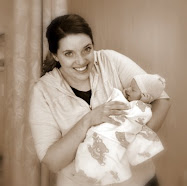
My name is Natalie. I am a wife, a mother of almost five boys, a doula, and a Hypnobabies Instructor! I'm passionate about childbirth and hope to help women realize the power that is in them to birth more normally and naturally. It's my goal to help women feel confident and comfortable during pregnancy, labor, and delivery. Yes, it is possible! It's also amazing, incredible, wonderful, empowering, and life changing.

As a doula, I am a trained professional who understands and trusts the process of birth. I provide continuous care for the laboring mother and her partner. Studies have shown that when doulas attend births, labors are shorter with fewer complications. I attend to women in labor to help ensure a safe and satisfying birth experience in both home and hospital settings. I draw on my knowledge and experience to provide emotional support, physical comfort and, as needed, communication with the other members of your birth team to make sure that you have the information that you need to make informed decisions in labor. I can provide reassurance and perspective to the laboring mother and her partner, make suggestions for labor progress, and help with relaxation, massage, positioning and other techniques for comfort.

Feel free to contact me at doulanataliesue@gmail.com.
Thanks for stopping by!

Pages

Showing posts with label VBAC. Show all posts

Thursday, March 21, 2013

C-Sections and VBACs: Why our lack of choice matters

http://www.nj.com/parenting/index.ssf/2013/03/post_21.html

Our decisions as parents often begin even before the baby is born. I was thinking about this very idea as I read that the most common elective surgery in the United States is now the Caesarean-Section. Note that the word “elective” is used quite liberally. In sad irony, when a Tampa woman refused to go to the hospital for an elective, scheduled Caesarean-Section, her doctor threatened to call the police to force her to have this elective surgery.
When I had my first two daughters, I never thought of a C-Section as "elective" surgery. Perhaps this is because I was told I didn’t have a choice. Our first child was breech. My obstetrician advised a breech babies must be delivered surgically. Our second child was a repeat C-Section. My doctor advised I would have difficulty finding a provider who would agree to a vaginal birth after a C-Section.
As a highly educated person, I found that I was highly uneducated on my options and rights. I didn’t know I could have a breech baby vaginally. I didn’t know there were providers in NJ who encourage VBACS (Vaginal Births After C-Sections). There was so much misinformation and so much judgment. People talked to me about safety and unnecessary risk. I didn’t know what was true. I decided to do my own research into what research existed. The only thing I was certain of was a compelling force inside that wanted the opportunity to give birth as nature had intended. I wanted a chance to tap into the power of one of the most powerful experiences life has to offer. I wanted a choice, some control, and some respect. At 38 weeks pregnant with our third child, I didn’t want a third scheduled C-Section. I found myself crying at the kitchen table telling my husband what this all meant to me and that I feared not trying for a VBAC would be a life-long regret.

My husband agreed to explore these options with me. We learned that the chances of something going wrong in a VBAC were almost exactly identical to the risks of a repeat C-Section. We learned that a C-Section brought an increased risk for respiratory issues, jaundice, and other complications. Ultimately, we decided to try for a VBAC. I am eternally grateful to the Hackettstown Midwives, Dr. David Garfinkel, and the staff at Morristown Hospital for their care.
Some people may wonder what the big deal is about. If you have a healthy baby then so what? Some women even choose a C-Section. That's fine. I’m not against C-Sections. Sometimes they are extremely necessary. Rather, I support choice and sensitivity. I don’t think cost, convenience, insurance companies, and my doctor or hospital’s fear of a lawsuit should dictate such a personal decision. How our children enter this world effects us as mothers. It impacts our families. Parents should have more say about what is best for their family with regard to risk, recovery time, and other relevant issues.

After surgery, I was even told to consider myself lucky I avoided the pain of birth. For anyone who’s missed out on having a c-section, try walking around with a constant feeling like you have been sawed in half. I felt like a botched magic-trick. I was then told I couldn’t exercise, vacuum, drive a car, walk long flights of stairs, or lift anything heavier than my infant for six weeks. With a toddler at home, three dogs to walk, and a household to run, that restriction lasted eighteen hours before I gave in. Personally, after 29 hours of unmedicated labor with my third child, I would choose the experience of naturally working through contractions to 10cm again over a C-Section.
In modern times, it is concerning that this issue remains so embryonic (no pun intended) .Many physicians and hospitals still prohibit VBACs. VBAC home births are still illegal. We live in a country where you can electively have your nose broken to reshape it, inject fat from your butt into your face to look younger, but pushing a baby out of your own vagina can be restricted. I can only imagine if men gave birth how there would be more convenience and choice.
I am interested to hear your birth experience and how it shaped you? How did your control or lack thereof effect your life? 

Monday, June 13, 2011

Too Many C-Sections: Docs Rethink Induced Labor

By TIFFANY O'CALLAGHAN Monday, Aug. 02, 2010

Click here to find out more!
LWA-Stephen Welstead / Corbis
The rise in cesarean-section deliveries in recent years has been characterized by some as a key indication of the overmedicalization of childbirth. While the procedure undoubtedly saves lives and leads to better health outcomes for mothers and infants who face problems during pregnancy and labor, many experts say the procedure is being performed too often, and in many cases for nonmedical reasons, putting healthy women and babies at undue risk of complications of major surgery.
The rate of C-sections has reached more than 31% in the U.S., a historical high, according to 2007 data from the American College of Obstetricians and Gynecologists (ACOG). The reasons for the increase are many and have been widely discussed: the rising rate of multiple births, more obesity in pregnant women, the older age of women giving birth. In fact, C-sections have become so common that many women may have an inflated sense of safety about them. "For the most part, moms and babies go through the process healthy and come out healthy, so maybe there's this sense that we're invincible," says Dr. Caroline Signore of the Eunice Kennedy Shriver National Institute for Child Health and Human Development.(See pictures of pregnant-belly art.)
But C-section carries all the attendant risks of major surgery; and data show that compared with vaginal birth, cesarean delivery increases the odds that a mother will end up back in the hospital after birth with complications such as bleeding or blood clots.
Now obstetrics experts are actively seeking ways to drive down the number of C-sections. On July 21, the ACOG issued new guidelines recommending that hospitals allow most mothers who desire vaginal birth after cesarean, or VBAC, to attempt a trial of labor, including some mothers who are carrying twins or have had two prior C-sections. Despite studies showing VBAC to be safe for most women — ACOG data suggests that 60% to 80% of women who attempt VBAC will succeed — many hospitals have urged women to undergo a repeat cesarean over the past decade, largely to avoid medical risks and malpractice suits.(Read how postpartum depression can strike fathers.)
Another factor contributing to high C-section rates is the increase in induced labor, especially between 37 weeks and 38 weeks of gestation — a period obstetricians describe as "early term." (While any birth between 37 weeks and 41 weeks is considered full term, some experts distinguish the earlier period.) The use of labor induction in the U.S. has risen from less than 10% of deliveries to more than 22%, between 1990 and 2006, according to data from the Centers for Disease Control and Prevention, and research suggests that induced labor results in C-sections more often than natural labor. A study published in the July issue of the journal Obstetrics & Gynecology found that among more than 7,800 women giving birth for the first time, those whose labor was induced were twice as likely to have a C-section delivery as those who experienced spontaneous labor.
The study's lead author, Dr. Deborah Ehrenthal of Christiana Care Health System in Newark, Del., says that she was not surprised to see an association between induction and risk of C-section, since previous studies had come to the same conclusion. But Ehrenthal says she was surprised by the high rate of induction overall. In her study of ethnically and socioeconomically diverse mothers delivering before 41 weeks' gestation, who did not have pregnancies complicated by breech presentation, 44% of women had their labor induced.(Read about the risks of late preterm births.)
The rate is significant because ACOG guidelines, which have been in place since 1982, recommend against elective inductions in the early term, or anytime before 39 weeks. Research shows that after 41 weeks' gestation, at which point it is standard policy to induce labor, it may lower the risk of medical complications for mother and baby — including the risk of stillbirth — and even decrease the likelihood of C-section delivery, but those same effects are not seen in women who induce labor before the 41-week mark.
Medical reasons for earlier induction may include advanced size or lack of proper growth of the fetus and maternal issues like diabetes. But in an editorial accompanying Ehrenthal's paper, Signore also suggests that the high rate of early-term induction may reflect lifestyle choices: health care providers' and new parents' desire to control the timing of delivery. "Many women believe that delivering a few weeks early is just as safe as delivering on the projected due date and may request delivery for any number of reasons of comfort or convenience," Signore writes. "However, we must remember that incautious use and timing of interventions — particularly in elective cases — can lead to unnecessarily poorer outcomes for women and newborns."
Among the women whose labor was induced in Ehrenthal's study, nearly 40% of cases were categorized as elective. In other words, there was no pressing medical indication for induction. Extrapolating from the study findings, Ehrenthal suggests reducing the use of elective labor induction could lower the national C-section rate by as much as 20%.
Several hospitals have already begun reducing medically unnecessary induction as a way to lower the rate of cesareans. In 2006, the Magee-Womens Hospital in western Pennsylvania began limiting the pool of women eligible for elective inductions to those delivering after 39 weeks. The hospital also established stricter protocols for elective induction in women after 39 weeks — insisting on high levels of cervical "ripeness" as measured by the standard Bishop score before induction — and prohibited other labor-hastening efforts, such as the use of cervical ripening agents. Additionally, the hospital instituted a new scheduling system requiring physicians to document specific reasons for induction when used.
Researchers found that under the new policy the overall induction rate dropped 33% and the rate of elective inductions fell by roughly the same amount. What's more, the total number of C-sections among first-time mothers who underwent elective induction dropped 60%. The results of the Magee-Womens study were published in April 2009 in the journal Obstetrics & Gynecology.
If a relatively simple policy shift based on medical evidence can successfully cut the rate of induced labor and C-sections at a single hospital, experts say similar changes applied broadly may help lower the rate of C-sections on a national level.
But as with the new guidelines regarding VBACs, decisions about labor induction and other issues surrounding childbirth must be shared by women. Patients should be informed and included in the decisionmaking process, Ehrenthal says. "Unlike the decision to do an emergency C-section where there's no time to talk, usually there is time to have a discussion about induction," she says.


Read more: http://www.time.com/time/health/article/0,8599,2007754,00.html#ixzz1PApJAvQV