Welcome!

Welcome to my Doula Blog! I hope you find it interesting and informative.

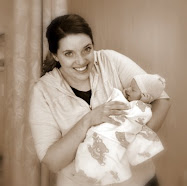
My name is Natalie. I am a wife, a mother of almost five boys, a doula, and a Hypnobabies Instructor! I'm passionate about childbirth and hope to help women realize the power that is in them to birth more normally and naturally. It's my goal to help women feel confident and comfortable during pregnancy, labor, and delivery. Yes, it is possible! It's also amazing, incredible, wonderful, empowering, and life changing.

As a doula, I am a trained professional who understands and trusts the process of birth. I provide continuous care for the laboring mother and her partner. Studies have shown that when doulas attend births, labors are shorter with fewer complications. I attend to women in labor to help ensure a safe and satisfying birth experience in both home and hospital settings. I draw on my knowledge and experience to provide emotional support, physical comfort and, as needed, communication with the other members of your birth team to make sure that you have the information that you need to make informed decisions in labor. I can provide reassurance and perspective to the laboring mother and her partner, make suggestions for labor progress, and help with relaxation, massage, positioning and other techniques for comfort.

Feel free to contact me at doulanataliesue@gmail.com.
Thanks for stopping by!

Pages

Showing posts with label Home Birth. Show all posts

Sunday, January 15, 2012

Home Birth is Safe says new study

Having your baby at home with a registered midwife is just as safe as a conventional hospital birth, a new study says.
In fact, planned home births of this kind may have a lower rate of complications, according to the study published in the Sept. 15 issue of CMAJ.
Even though the study was conducted in Canada, where attitudes toward midwifery are more accepting than in some other countries, the findings may help to calm an ongoing controversy in the United States and elsewhere.
The American College of Obstetricians and Gynecologists is opposed to home births, as are certain organizations in Australia and New Zealand. More organizations in Great Britain are supportive and Canadian provinces are currently transitioning to midwifery, said study lead author Patricia Janssen, director of the Master of Public Health Program at the University of British Columbia.
Janssen, a registered nurse who has midwife training though not certification, said: "People who function as independent midwives are not necessarily tightly regulated [in the U.S.] depending on which state you're in, so there may not be a guarantee that they have had an adequate level of training or a certified diploma or anything like that. And they may not be monitored and regulated by a particular professional college."
The controversy has resulted in a lack of clear regulation and licensing requirements in the United States, said Dr. Marjorie Greenfield, associate professor of obstetrics and gynecology at University Hospitals Case Medical Center in Cleveland.
According to Greenfield, the National Association of Certified Professional Midwives does have a certification process but many states don't recognize it. "If you're a woman who wants to have a home birth, how do you determine if this person has appropriate qualifications?" she said.
The authors of the new study compared three different groups of planned births in British Columbia from the beginning of 2000 to the end of 2004: home births attended by registered midwives (midwives are registered in Canada), hospital births attended by the same group of registered midwives, and hospital births attended by physicians. In all, the study included almost 13,000 births.
The mortality rate per 1,000 births was 0.35 in the home birth group, 0.57 in hospital births attended by midwives, and 0.64 among those attended by physicians, according to the study.
Women who gave birth at home were less likely to need interventions or to have problems such as vaginal tearing or hemorrhaging. These babies were also less likely to need oxygen therapy or resuscitation, the study found.
The authors acknowledge that "self-selection" could have skewed the study results, in that women who prefer home deliveries tend to be healthier and otherwise more fit to have a home birth.
Janssen said she hoped "this article will have a major impact in the U.S." But there is a definite "establishment" bias against home births. And the issue is an emotionally charged one, she said.
"There is a political and economic issue about controlling where birth happens, but also a deep belief by physicians that it's not safe to have your baby at home," Greenfield said. "Doctors see every home-birth patient who had a complication, but we don't see the ones that have these beautiful, fabulous babies at home who may breast-feed better or have less hospital-acquired infections. There may be medical benefits," she added.
"Midwifery needs to be regulated. It can't be under the radar because then it's dangerous," Greenfield said. "There has to be a regulatory process and a licensure process [to protect] women who are going to choose home birth anyway."

Wednesday, May 4, 2011

The trouble with Extrapolating Hospital Birth Events to Homebirth

“If I were at home, I would have died” — The trouble with Extrapolating Hospital Birth Events to Homebirth

A midwife in North Carolina was recently charged with practicing midwifery without a license because her state does not license Certified Professional Midwives (CPMs) and other direct entry midwives.  There was some local news coverage of the arrest and the ongoing efforts of North Carlina families to legalize CPMs. One of the local news stories contained the “If I were at home, I would have died” sentiment.
When I hear statements like this I cringe on the inside.  Being a midwife, I hear it a lot.  Women love to talk about their birth stories, naturally. In the park, at mom’s groups, among new friends, anywhere women gather there are stories of births and babies being told. When a mother begins telling me her story from the “I would have died at home” perspective, I nod with empathy and say mmm hmm.
A typical hospital birth hook-up: pitocin to speed up labor, epidural medication, and an IV bag. Pitocin use in labor makes women more likely to hemorrhage after birth.
It’s a bit of a double bind (midwives and doulas — you know what I am talking about). Every woman’s story is inherently valid and it is her story to tell, her journey. On the other hand, my inner advocate of truth wants to illuminate the myths and realities of the hospital birth industry. In these moments I strive to listen with deep gratitude, kindness and love. The best I can do is to honor the mother’s feelings and experiences while side-stepping all the nuts and bolts of the “I/we would have died” argument. That can get messy; So often, it is the unnecessary interventions that cause the emergencies.
But since it’s coming up in the again in the media and a larger audience of women is hearing such emotionally charged statements about homebirth, it’s time to get messy. Why do women in the US die while giving birth? No one knows for certain because our reporting methods for maternal mortality are so abysmal. We think, based on fractured US statistics and older studies, that the primary causes of death to women during birth or shortly after are thromboembolism, preeclampsia/eclampsia, hemorrhage, infection, and anesthesia deaths.
Lets look at hemorrhage because it is the most likely to occur in a homebirth setting, though the risk is extremely small when compared with hospital birth.
Here are a few reasons why. Homebirth and hospital birth are supported by two divergent models of care. The homebirth model subscribes to the philosophy of don’t fix what isn’t broken: natural processes generally work best when they are not interfered with. The medical model subscribes to the (more profitable) philosophy of action: pregnancy and birth are conditions that require fixing.  All actions and interventions have consequences. Many of the interventions in a typical hospital birthcause complications, like hemorrhage.  These interventions do not happen at home.
New research demonstrates that women whose labors are altered by prolonged exposure to pitocin are more likely to hemorrhage after their birth. This is because oxytocin, our body’s own version of pitocin, helps the uterus to contract after birth and minimize blood loss. Pitocin binds to oxytocin receptor sites, and over time the body becomes desenstitized to it, preventing the uterus from contracting normally and leading to hemorrhage.  Regrettably, we’ve gotten to a point now where most births in the US are started artificially with the help of pitocin (induction) or hurried along by it (augmentation). Homebirth midwives do not use pitocin to start or speed up labor.
Immediate postpartum interventions can also lead to hemorrhage. The period just after birth is a unique and potent time biologically for the mother and baby. A natural flood of hormones connects mother and baby physically and emotionally, and helps the mother safely birth her placenta. The mother’s hormone levels will never be as high as this hour after birth; and when this flow is is disrupted the mother is more likely to bleed excessively.
Interventions during this immediate postpartum time are routine in a hospital setting: failing to give the baby to the mother immediately, assessing the baby away from the mother, pulling on the umbilical cord, changing the mother’s position to suit the care provider, diverting the mother’s attention away from the baby, clamping and cutting the umbilical cord without any good reason to do so, etc.
Midwives honor the biological importance of the hormonal bubble after birth and do not intervene unless the mother or baby needs help.
In a typical homebirth, mother and baby are undisturbed after birth. The midwife does not unnecessarily poke, prod, clamp, or otherwise interfere with the mother and baby unit.
When you hear someone say “I would have died if I had a homebirth” or “my baby would have died” please remember that these are very emotionally charged declarations. In many cases, unnecessary interventions have causedthe complications that women and babies suffer from.  (The CDC has estimated that half of maternal deaths are preventable).
You can’t simply cut and paste all the circumstances surrounding a given hospital birth, superimpose them on a homebirth setting, and predict the same outcome — or vice versa. The models of care are too divergent. Women can die from birth complications in any setting, and our hospital death rate from birth-related causes is indefensibly high. We know that low-risk women are as safe, if not safer, birthing at home.

The United States ranks 41st in maternal mortality among nations. That means in 40 other countries, women are less likely to die from pregnancy and birth related causes. The CDC also states that half of the reported deaths were preventable and that death rates are underreported by almost a third. On April 9th the Healthy Mothers Healthy Birth Summit will convene in Washington D.C. to examine the clinical and political issues surrounding maternal death in the United States.

Thursday, March 3, 2011

Home Birth -Breech

This is an incredible post! And a great birth story.

http://redheadmusings.blogspot.com/2010/06/story-of-miriams-breech-homebirth.html

Friday, January 29, 2010

Blessings of Homebirth

"Knowing comes from the place within us that is connected to our source." From A Still, Small Voice by Echo L. Bodine

A month before the due date of my second pregnancy, I had a dream that there were two little girls with pigtails in their hair joining our family. When I told my husband about my dream, he joked, "there had better be only one baby in there. We only have one more bedroom!"

We were planning a homebirth for this pregnancy. Our son had been born at home without complications. In fact, his birth had gone so quickly, that we had barely enough time to fill the birth tub before he emerged. This time, my husband planned to fill the birth tub right away at the start of contractions.

My second pregnancy was "normal" as far as anyone could tell. I had regular prenatal care with my midwife and our family practitioner. Both felt I was a fine candidate for a second home birth, and that ultrasound wasn’t necessary for me. I measured a little big, but that had been the case with my son as well. Several people joked to me about possibly carrying twins, yet when my practitioners checked me, they both only heard one heartbeat. As part of our preparation for birth, we reviewed the "Emergency Childbirth" pamphlet from our midwife, and consciously visualized a positive birth outcome.

A week before my due date, my husband and son set up the rented birth tub in our home. When I saw the tub sitting there ready to go, I felt a spasm of fear for what was to come. My husband held me as I cried out my fears, and as the tears subsided, the fear was still real to me, but from the bottom of my heart I knew that everything would turn out alright.

Early on the morning of my due date, I woke my husband, David, to tell him that contractions had begun. He immediately called my mom and the midwife, and started to fill the birth tub. After a few contractions I needed David to put pressure on my low back. Between contractions he opened our birth kit, adjusted the faucet temperature, and gave me sips of water. As soon as the tub was deep enough I climbed in. It was much easier to handle the contractions in the water.

Nevertheless, I suddenly needed to roar through the contractions. I made deep, low moaning noises. I started crying. I knew I was in transition from the emotions that were flowing. I felt like pushing, and started to blow air through my mouth to hold back until the midwife could arrive. I needed to squat. I panted, blew air, and then started pushing because there was no way not to push. David briefly wondered where the midwife was. After a couple of pushes the baby came out all at once. We gently lifted her up out of the water and held her close. While we tried to start nursing I felt strong contractions resume, and again experienced the urge to push. I reached down and felt a second head with my fingertips.

Now, instinctively, I knew it was a second baby, and my body knew exactly what to do, though this certainly wasn't planned! I softly cradled Baby 1, as I squatted and pushed. It was easier this time, and after two pushes Baby 2 shot out into the water. Her head was covered with the sac. David removed the membranes and lifted her to my other breast.

The babies were slippery, and my arms were coated with vernix. As Baby 2 latched on to nurse, finally both the midwife and my mom arrived at the same time. We were all in a state of shock and disbelief. My midwife consulted the clock and realized that my labor had lasted less than 50 minutes. We weighed the babies: 5 lbs. and 5 lbs. 12 oz. The placenta weighed 8 ½ pounds!

While I dozed in bed with the babies, I remembered the dream about the two little girls with pigtails in their hair. I realized then, that deep down, on some level, I had known all along that I had been carrying twins. The pieces fell into place as I relived my pregnancy with this new information. No wonder I had felt so tired!

My family was incredulous. Each visitor who stopped by with good wishes needed to see both of the babies to believe that there really were two of them. Every time I looked at the twins I was full of wonder. Most of all I was euphoric: I had handled the birth by myself, twins or not, and it had gone beautifully. Everything had turned out just fine.

Over time, I have realized, with much gratitude, how we had been living in a protected space during the twins' pregnancy and birth. I believed my care providers who told me that I was carrying a singleton. I trusted in my strength as a woman to give birth, and I trusted my body to tell me what I needed to know, and to do what needed to be done. In not noticing the signs that I was carrying twins, I was able to view my pregnancy as completely normal. And I was free of the interventions that are standard in multiple pregnancies and births today, such as bed rest, fetal testing, continuous monitoring, and obligatory c-sections.

Now that my twins are four, I find I am still processing their birth mentally, emotionally and spiritually. As the haze of hormones has lifted, I see that their birth was a blessing on many levels.

I feel blessed to have been held in a bubble of safety, in not being conscious of the fact that I was carrying twins. I feel so fortunate to have been surrounded by care providers who believed in me and in the birth process. And I feel privileged to have experienced my own power during unassisted homebirth. I believe that things happen for a reason, and I attribute this experience to the work of the Divine.

The birth process taught me that I have inner wisdom and my twins' births gave me further impetus to explore my intuition. After the birth of my twins I had an awakening of the soul. I came to respect the power of my intuition, and have since decided to use it and cultivate it more. This "knowing", which Echo Bodine talks about in her book A Still, Small Voice, has connected me to my calling: planning and facilitating gatherings of women and girls to honor life's passages as sacred. My intuition told me that women's life passages, like pregnancy, birth, coming of age, and loss, need to be honored and celebrated.

The legacy of my twins' births is my conviction to tell this birth story again and again. Not only because I am an example of uncomplicated, unassisted homebirth of unexpected twins, but also because by sharing my story, I honor this passage and my body's message to me. And these are some of the many blessings of homebirth.

Sunday, October 4, 2009

Article on Home Birth

By: Jennifer Block
Click HERE to read the article.

The randomized controlled trial provides the evidence base for "evidence-based medicine," the movement toward employing only those treatments that have passed rigorous clinical study. Considered to be the gold standard, the highest quality research evidence obtainable, the RCT is basically the classic high school science experiment: divide two groups of subjects with the same characteristics, assign one to treatment A and one to placebo, and observe the outcomes. ACOG's response is doubly ironic because obstetrics has arguably been the slowest specialty to adopt the philosophy of evidence-based care — indeed, most labor interventions became routine without any study whatsoever, and several, like continuous electronic fetal monitoring and episiotomy, continue to be used even though copious evidence has proved them unnecessary and potentially harmful.

They do have a point about there being no RCTs on home birth, which is often the same point Tuteur makes when she criticizes a study for not comparing apples to apples. But there's a good reason for it: how many women would agree to be randomly assigned to where they will give birth? Not many, researchers have found. "It has been shown that conducting a randomized controlled trial is not possible," write the authors of the Dutch home birth study. "Good quality observational studies are therefore the only source of evidence on this subject." In evidence-based medicine, observational studies are second-tier (because the characteristics of groups A and B are not tightly controlled), but with home birth — and breastfeeding, and other large questions about childbirth for which women will not be subjected to random assignation to answer — they are best evidence possible.
Which brings the debate over safety to a bit of an impasse: if the only research that will satisfy those with authority and power is research that is unfeasible, the controversy will never be resolved. There could be 20 more large, observational studies that come to the same conclusion as those that already exist, but they still wouldn't be randomized controlled trials. The home birth advocates would continue to say "The research proves it's safe!" and the American medical establishment would continue to say "The research isn't good enough!"
The physicians are of course entitled to their opinion, but this opinion is often presented as fact, with the weight of medical authority. An American Medical Association resolution passed last year states without qualification that " . . . the safest setting for labor, delivery, and the immediate post-partum period is in the hospital" or accredited birth center, and promises legislative action to discourage birth outside it. Again, there is no research cited to back up this claim — because there isn't any. "We don't have evidence that home is safer than hospital, or that hospital is safer than home," says Soo Downe, a researcher with the Cochrane Collaboration, the international authority on evidence-based medicine. "There's absolutely no evidence either way at the level of randomized controlled trials."
One of the reasons the medical side has a hard time accepting home birth is that they forget that there are risks to being in the hospital. "It appears that being in a big and busy place with the attitude that birth is dangerous until proven otherwise may bring risks to women," says Downe, like higher rates of unnecessary surgery and invasive procedures, separation of mother and baby, and emotional trauma. Melissa Cheney calls this phenomenon "multiple interpretations of risk." "The physicians are talking about dangers to baby, while the mother might be talking about the dangers to her own body, or the danger of feeling victimized by an unnecessary cesarean, and having to go on and parent from a position of victimization. Her definition of risk tends to be much broader."
These policies may increase the risk to women and babies. Cheney would like medical staff to see the home birth population as a cultural group, with its own language and value system, and for the staff to have a degree of cultural competency. The lack of cross-cultural understanding breeds hostility in the community and in the delivery room during a transport. "There can be a lot of mother blaming or midwife blaming," says Cheney. "This can produce a very very hostile environment, just at a time when it is crucial that the doctor and midwife communicate across that divide. The outcome is very dependent upon that communication."
Meanwhile, more and more American women want to give birth outside the hospital setting — and economists have shown huge potential cost savings in terms of health reform — yet physicians' groups are fighting to keep certified professional midwives marginalized, and in some states, criminalized. The ACOG and the AMA policies prohibit physicians from collaborating with CPMs, which contributes to the hostility, and which may in fact contribute to a birth outcome that's worse than if a woman's choice had been supported and the midwife and physician had been encouraged to collaborate. In other words, these policies may increase the risk to women and babies.
Many physicians do support home birth midwives, and they are furious that their professional organization would not only try to dictate what women should do, but also how they should practice. In an open letter castigating ACOG and AMA, Canadian obstetrician Andrew Kostaska, MD, urged the American obstetric establishment to "join the 21st century." "Informed choice is the gold standard in decision making, and it trumps even the largest, cleanest, randomized controlled trial," he wrote. "Science supports home birth as a reasonably safe option. Even if it didn't, it still would be a woman's choice . . . As scientific evidence supporting its safety mounts, however, [ACOG and AMA] will be forced to accede or get left behind."