Welcome!

Welcome to my Doula Blog! I hope you find it interesting and informative.

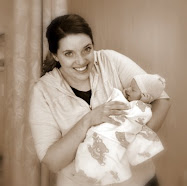
My name is Natalie. I am a wife, a mother of almost five boys, a doula, and a Hypnobabies Instructor! I'm passionate about childbirth and hope to help women realize the power that is in them to birth more normally and naturally. It's my goal to help women feel confident and comfortable during pregnancy, labor, and delivery. Yes, it is possible! It's also amazing, incredible, wonderful, empowering, and life changing.

As a doula, I am a trained professional who understands and trusts the process of birth. I provide continuous care for the laboring mother and her partner. Studies have shown that when doulas attend births, labors are shorter with fewer complications. I attend to women in labor to help ensure a safe and satisfying birth experience in both home and hospital settings. I draw on my knowledge and experience to provide emotional support, physical comfort and, as needed, communication with the other members of your birth team to make sure that you have the information that you need to make informed decisions in labor. I can provide reassurance and perspective to the laboring mother and her partner, make suggestions for labor progress, and help with relaxation, massage, positioning and other techniques for comfort.

Feel free to contact me at doulanataliesue@gmail.com.
Thanks for stopping by!

Pages

Showing posts with label Natural Childbirth. Show all posts

Thursday, June 9, 2011

5 Ways to Prepare for a Natural Birth in a Hospital

Five Ways to Prepare for Natural Birth in a Hospital

January 13th, 2011 by Melissa K. | 16 Comments 
Posted in BirthPregnancyPreparing for Parenting
I am a huge supporter of home birth, and a believer in the idea that we should trust the natural process of birth. I do not believe that a normal birth is a medical event, and I feel that in most cases, medical intervention is a detriment rather than a help. I also birthed in a hospital.
I sincerely wanted a home birth, but there were many reasons why I eventually decided that a hospital birth this time around was the wisest decision for me. I never intend to birth in a hospital again, but I know that I made the right decision for my first birth. I have heard many horror stories about women’s attempts at natural birth in a hospital, but mine was absolutely perfect. So, for those mothers who desire a natural birth, but for whatever reason must have (or simply would rather opt for) a hospital birth, I want to share my story.
I did not just luck out and end up in a particularly naturally-minded hospital – in fact I birthed in a military hospital, with the OB on call. I didn’t know which OB or nurse would be present for my birth until I arrived at five centimeters dilated. I still had a wonderful experience, and I hope that you can, too!
Here are the things I found to be integral to my success in having the birth I wanted, even though it was not in conditions that I considered ideal:
1. Educate yourself about pregnancy and birth.
When preparing for birth in the medical system, any number of tests, procedures, and medications may be suggested. If you’re not well versed on normal (natural) pregnancy it’s hard to decide what is sound advice, and what is unnecessary or even harmful for you and/or your baby. When you’re proactive and know what to expect, it’s easy to respectfully decline any or everything doctors suggest.
2. Learn to smile and nod.
Doctors will give all kinds of advice, and may even attempt to tell you that you must do x, y, or z. Ultimately, every decision is yours to make. Learn to trust yourself and your body and take their advice with a grain of salt. Smile, nod, go home, do your own research, and make your own decision. Of course some will choose to share information with their doctor, in hopes of opening their eyes to alternative ways of doing things. I chose to avoid debate in my attempt at a stress-free pregnancy.
3. Have a birth plan.
There are differing opinions on the usefulness of a birth plan. For me, it was indispensable. I was working with multiple OBs and did not know before my birthing day which one of them would be attending my birth. Because of that, I brought my birth plan to prenatal visits and had each and every doctor look it over and talk to me about anything I was planning that they were uncomfortable with. This was extremely helpful because I was able to share sound research to support my decisions in advance, so that when the big day came, there were no disagreements and no questions.
One doctor, for example, had never had anyone ask to delay the cutting of the umbilical cord. It was against his usual way of doing things and he was not comfortable with the idea at first. I had the opportunity to explain to him why I wanted to delay, and why it was actually better for my baby to do so. In the end, he was supportive of my wishes and I was at ease, knowing that everyone knew what to expect.
Even if you choose not to share yours with the hospital you’re working with ahead of time, at least have it for yourself, so that you know how you will respond to every choice you’re faced with at the time of your birth. This is especially important since many things aren’t presented as a choice, but rather as simply-the-way-things are-done. Everything is a choice. It is your birth.
In my case, I opted to wear my own clothes instead of a hospital gown so that I wouldn’t feel like a “patient.” I chose not to have an IV. I chose to eat and drink during my birth. I wanted the lights in my room low and for those who came in to use soft voices. I wanted my daughter placed on my chest immediately, and didn’t want her to be bothered with a bath on her birth day. Had I not specifically stated my wishes, I would have been told to put on a gown at arrival, given an IV, and subjected to the usual overhead lights and whatever noise level the doctors and nurses were used to. Every doctor has their way of doing things, and often they forget to consider that their way does not work for every patient. Make your voice heard.
4. Have a support team that is respectful of your wishes and that will put you at ease.
I absolutely love the idea of having another mother, another woman, there to ‘mother’ you through your birth. The idea of a doula is a fantastic one and I think that every woman who wants a doula ought to have one. I also know myself, and I don’t like people in my space. I’m not comfortable with having things done for me. It can be hard for me to accept advice and support and help without feeling patronized. I met with the doulas in my area and ultimately decided that anyone other than my husband would put me on edge rather than at ease. I chose to have only him at my birth.
I discussed my birth plan with my husband and we worked through a number of “what-ifs” together, in hopes of being prepared for anything and everything. He was wonderful, and I was pleased with my decision to make our birth just about us. Of course I know many women who adored their doula, or are so happy that they had their mom, their sister, their best friend, but everyone is different! Assemble your team, and make sure they’re there to protect your wishes.
5. Take a childbirth preparation course and/or do plenty of reading on birth.
Taking a childbirth preparation course or reading a book like Pam England and Rob Horowitz’s Birthing From Within will give you strategies that you can use to work through any discomfort that you may feel on the day of your birth. It will also help you to know what to expect during each stage.
Personally, I used the Hypnobabies Home Study Course and read several books such as Birthing From Withinand Dr. Sears’ The Birth Book. On my daughter’s birth day, I had intense “back labor,” but thanks to my reading, knew of several ways to ease the discomfort and work through it. Thanks to Hypnobabies, I was also well-practiced with a number of relaxation tools to help me remain calm until the discomfort passed. At one point during my birth, I began to think I may not be able to handle much more. Fortunately, I had read several times that this was a common feeling during “transition” (or as Hypnobabies refers to it: “transformation”), and knew that this meant my baby would likely be born very soon. Instead of becoming frightened and questioning my ability to continue without pain medication, I became more excited and worked through the intensity.

Monday, March 15, 2010

Vernix and Amniotic Fluid

Why not to wash your new baby straight away...
Why to avoid artificial rupture of your membrances...

It turns out that vernix (the white stuff some babies are born with) and amniotic fluid have similar immune enhancing properties to breast milk... artificial rupturing of membranes can take away the amniotic fluid's protective capability. Cleaning your baby straight away can take away the immune protecting properties of vernix....


Source: Pubmed central.


http://www.pubmedcentral.nih.gov/articlerender.fcgi?artid=1595247


ANTIMICROBIAL PROPERTIES OF AMNIOTIC FLUID AND VERNIX CASEOSA ARE SIMILAR TO THOSE FOUND IN BREAST MILK


  • Akinbi, H. T., Narendran, V., Pass, A. K., Markart, P., & Hoath, S. B. (2004). Host defense proteins in vernix caseosa and amniotic fluid. American Journal of Obstetrics and Gynecology, 191(6), 2090–2096.

Summary

In this study, researchers analyzed samples of amniotic fluid and vernix caseosa (vernix) from healthy, term gestations to determine the immune properties of these substances. Participants were pregnant women admitted for elective cesarean section after 37 weeks gestation with no prior labor and no signs of chorioamnionitis (intrauterine infection). Women with a history of prenatal fever or premature rupture of membranes, or who received steroids prenatally or antibiotics while giving birth were excluded, as were women whose babies passed meconium in utero, had congenital malformations, or required prolonged resuscitation after birth. Amniotic fluid was obtained by amniocentesis to determine fetal lung maturity prior to elective birth. Vernix was gently scraped from the newborn's skin with a sterile implement immediately following birth. The researchers obtained 10 samples of amniotic fluid and 25 samples of vernix.

Tests (Western analysis and immunochemistry) revealed that lysozyme, lactoferrin, human neutrophil peptides 1–3, and secretory leukocyte protease inhibitor were present in the amniotic fluid samples and in organized granules embedded in the vernix samples. These immune substances were tested using antimicrobial growth inhibition assays and found to be effective in inhibiting the growth of common perinatal pathogens, including group B. Streptococcus, K. pneumoniae, L. monocytogenes, C. albicans, and E. coli.


The authors point out that the innate immune proteins found in vernix and amniotic fluid are similar to those found in breast milk. As the baby prepares for extrauterine life, pulmonary surfactant (a substance produced by the maturing fetal lungs) increases in the amniotic fluid, resulting in the detachment of vernix from the skin. The vernix mixes with the amniotic fluid and is swallowed by the growing fetus. Given the antimicrobial properties of this mixture, the authors conclude that there is “considerable functional and structural synergism between the prenatal biology of vernix caseosa and the postnatal biology of breast milk” (p. 2095). They also suggest that better understanding of these innate host defenses may prove useful in preventing and treating intrauterine infection.


Significance for Normal Birth


Routine artificial rupture of membranes increases the likelihood of intrauterine infection because it eliminates the physical barrier (the amniotic sac) between the baby and the mother's vaginal flora. This study suggests an additional mechanism for the prevention of infection when the membranes remain intact: A baby bathed in amniotic fluid benefits from antimicrobial proteins that are found in the fluid and in vernix caseosa.


The results of this study also call into question the routine use of some newborn procedures. Early bathing of the baby removes vernix, which contains antimicrobial proteins that are active against group B. streptococcus and E. coli. Delaying the bath and keeping the newborn together with his or her mother until breastfeeding is established may prevent some cases of devastating infections caused by these bacteria. The fact that preterm babies tend to have more vernix than babies born at or after 40 weeks might mean that healthy, stable preterm babies derive even greater benefit from staying with their mothers during the immediate newborn period.


Finally, this study illustrates how the normal physiology of pregnancy and fetal development is part of a continuum that extends beyond birth to the newborn period. The immunologic similarities between amniotic fluid, vernix, and breast milk provide further evidence that successful initiation of breastfeeding is a critical part of the process of normal birth

Friday, January 29, 2010

Blessings of Homebirth

"Knowing comes from the place within us that is connected to our source." From A Still, Small Voice by Echo L. Bodine

A month before the due date of my second pregnancy, I had a dream that there were two little girls with pigtails in their hair joining our family. When I told my husband about my dream, he joked, "there had better be only one baby in there. We only have one more bedroom!"

We were planning a homebirth for this pregnancy. Our son had been born at home without complications. In fact, his birth had gone so quickly, that we had barely enough time to fill the birth tub before he emerged. This time, my husband planned to fill the birth tub right away at the start of contractions.

My second pregnancy was "normal" as far as anyone could tell. I had regular prenatal care with my midwife and our family practitioner. Both felt I was a fine candidate for a second home birth, and that ultrasound wasn’t necessary for me. I measured a little big, but that had been the case with my son as well. Several people joked to me about possibly carrying twins, yet when my practitioners checked me, they both only heard one heartbeat. As part of our preparation for birth, we reviewed the "Emergency Childbirth" pamphlet from our midwife, and consciously visualized a positive birth outcome.

A week before my due date, my husband and son set up the rented birth tub in our home. When I saw the tub sitting there ready to go, I felt a spasm of fear for what was to come. My husband held me as I cried out my fears, and as the tears subsided, the fear was still real to me, but from the bottom of my heart I knew that everything would turn out alright.

Early on the morning of my due date, I woke my husband, David, to tell him that contractions had begun. He immediately called my mom and the midwife, and started to fill the birth tub. After a few contractions I needed David to put pressure on my low back. Between contractions he opened our birth kit, adjusted the faucet temperature, and gave me sips of water. As soon as the tub was deep enough I climbed in. It was much easier to handle the contractions in the water.

Nevertheless, I suddenly needed to roar through the contractions. I made deep, low moaning noises. I started crying. I knew I was in transition from the emotions that were flowing. I felt like pushing, and started to blow air through my mouth to hold back until the midwife could arrive. I needed to squat. I panted, blew air, and then started pushing because there was no way not to push. David briefly wondered where the midwife was. After a couple of pushes the baby came out all at once. We gently lifted her up out of the water and held her close. While we tried to start nursing I felt strong contractions resume, and again experienced the urge to push. I reached down and felt a second head with my fingertips.

Now, instinctively, I knew it was a second baby, and my body knew exactly what to do, though this certainly wasn't planned! I softly cradled Baby 1, as I squatted and pushed. It was easier this time, and after two pushes Baby 2 shot out into the water. Her head was covered with the sac. David removed the membranes and lifted her to my other breast.

The babies were slippery, and my arms were coated with vernix. As Baby 2 latched on to nurse, finally both the midwife and my mom arrived at the same time. We were all in a state of shock and disbelief. My midwife consulted the clock and realized that my labor had lasted less than 50 minutes. We weighed the babies: 5 lbs. and 5 lbs. 12 oz. The placenta weighed 8 ½ pounds!

While I dozed in bed with the babies, I remembered the dream about the two little girls with pigtails in their hair. I realized then, that deep down, on some level, I had known all along that I had been carrying twins. The pieces fell into place as I relived my pregnancy with this new information. No wonder I had felt so tired!

My family was incredulous. Each visitor who stopped by with good wishes needed to see both of the babies to believe that there really were two of them. Every time I looked at the twins I was full of wonder. Most of all I was euphoric: I had handled the birth by myself, twins or not, and it had gone beautifully. Everything had turned out just fine.

Over time, I have realized, with much gratitude, how we had been living in a protected space during the twins' pregnancy and birth. I believed my care providers who told me that I was carrying a singleton. I trusted in my strength as a woman to give birth, and I trusted my body to tell me what I needed to know, and to do what needed to be done. In not noticing the signs that I was carrying twins, I was able to view my pregnancy as completely normal. And I was free of the interventions that are standard in multiple pregnancies and births today, such as bed rest, fetal testing, continuous monitoring, and obligatory c-sections.

Now that my twins are four, I find I am still processing their birth mentally, emotionally and spiritually. As the haze of hormones has lifted, I see that their birth was a blessing on many levels.

I feel blessed to have been held in a bubble of safety, in not being conscious of the fact that I was carrying twins. I feel so fortunate to have been surrounded by care providers who believed in me and in the birth process. And I feel privileged to have experienced my own power during unassisted homebirth. I believe that things happen for a reason, and I attribute this experience to the work of the Divine.

The birth process taught me that I have inner wisdom and my twins' births gave me further impetus to explore my intuition. After the birth of my twins I had an awakening of the soul. I came to respect the power of my intuition, and have since decided to use it and cultivate it more. This "knowing", which Echo Bodine talks about in her book A Still, Small Voice, has connected me to my calling: planning and facilitating gatherings of women and girls to honor life's passages as sacred. My intuition told me that women's life passages, like pregnancy, birth, coming of age, and loss, need to be honored and celebrated.

The legacy of my twins' births is my conviction to tell this birth story again and again. Not only because I am an example of uncomplicated, unassisted homebirth of unexpected twins, but also because by sharing my story, I honor this passage and my body's message to me. And these are some of the many blessings of homebirth.

Thursday, January 28, 2010

Growing Number of Women Want Birth to Be a Natural Process, Not a Medical One

By SUSAN DONALDSON JAMES

July 28, 2008 —

Pregnant with her first child, Julie Speier prepared to deliver with the help of a midwife at a New York City birthing center. But in June -- three weeks before the due date and 600 miles from home -- her water broke.

Speier gave birth at a Cincinnati hospital, where she and her fiancé tried desperately to keep the birth natural -- a vaginal delivery without pain medication.

"I believe in the power of nature and that creation is next to perfect," said Speier, a 34-year-old yoga teacher. "I knew what I wanted and I had the confidence."

But as labor pains increased and Speier asked about breathing techniques, the doctor replied, "How do I know? I've only ever done two [natural childbirths]."

Today, natural childbirth is a medical anomaly in the United States, so much so that doctors are often thrown off guard by a determined woman like Speier.

A small but growing number of women who seek to avoid aggressive medical techniques like induced labor, epidural blocks and Caesarean sections find they are a lone voice among their friends and doctors.

"All of my friends think I am a little nuts," Speier said. "They say why would you do it natural?"

Speier said her own mother told her traumatic stories of her brother's breech birth. "Everyone I know has an 'I can top you' gory birthing story."

Pre-planned Caesareans are also in vogue. Women want to avoid future complications of multiple vaginal births, like uterine or bladder collapse. And today's body-conscious women worry needlessly about loss of muscle-tone.

'Too Posh to Push'

With the latest feminine plastic surgery rage -- so-called "pimping the vadge" -- some women prefer what the British call the "Posh push," referring to the planned Caesarean births of soccer celebrity David and Victoria Beckham's three boys.

Like the generation that pioneered the first wave of feminism in the 1970s, women like Speier want to take an active role in their health care. They view childbirth a normal, healthy process that requires time, patience, strength and endurance.

But in the decades since, new technologies, the rising cost of malpractice insurance and even the changing attitudes of women have all contributed to the near-demise of natural childbirth.

"It's a little tsunami," said Dr. Ben Sachs, chief of obstetrics at Tulane University in Louisiana. "All these forces are coming together at the same time."

Both doctors and midwives have been hit hard with the high cost of liability insurance. All agree they must take on more patients to keep their practices lucrative, giving them less time to wait out a long labor.

Doctors more frequently induce labor, using synthetic hormones like pitocin to strengthen and quicken labor, an intervention that was once used only as a "last resort."

But induction also heightens the pain of labor and can precipitate the use an epidural -- an injection in the lower back that blocks the pain of contractions while the woman is awake. And some say that, in turn, can delay the pushing mechanism and even trigger the need for a Caesarean.

Induction rates rose 5 percent in 2005 to 22.3 percent of all births -- double the rate since 1990, according to the National Center for Health Statistics. Caesarean deliveries have also jumped -- to more than 30 percent of all births, a 46 percent rise in the last decade and a 4 percent increase over the 2004 record.

Hospital Costs Spiraling

So, too, have hospital costs spiraled, and doctors say the first cuts are in obstetrical care. Hospitals in many parts of the country can now be sued for malpractice, further eroding support for what is perceived as the economic risk of natural childbirth.

"Childbirth doesn't get the attention and respect it should," Sachs told ABCNews.com.

But he said it isn't only doctors driving the medicalization of pregnancy, but women themselves.

Many women are having their babies older, necessitating more Caesarean sections for high-risk pregnancies. Younger women who fear the pain or the cosmetic consequences of a vaginal birth pre-plan a Caesarean with their doctor's blessing.

"The question is, has it done harm to women or the experience of childbirth?" Sachs asked. "Positive things are coming out of this. There is a concentration on patient safety and reducing medical errors."

But a national survey by Childbirth Connection found just one incidence in 1,600 of a planned c-section, for no underlying medical reason. The non-profit also said the rate of Caesareans is going up in all groups of birthing women.

"The American healthcare system is increasingly dependent upon medical interventions to address what is, most often, a normal and safe physiological process," said Rebecca Benghiat, executive director of the New Space for Women's Health in New York City, where the Caesarean rate has just hit 31 percent of all births.

"Quite often, women are not fully informed of the risks associated with commonly performed obstetrical interventions, nor do they know there are options beyond hospital birth," she said.

But, childbirth advocates say that for women with uncomplicated and low-risk pregnancies, a natural birth can be safe.

"This is a big mess and no one is sure how we got there," said Erica Lyon, director of the education center RealBirth in New York City and author of the "The Big Book of Birth."

"We had a wonderful movement in the 1970s when women wanted to take control of their bodies," she told ABCNews.com "When we got to the eighties, we assumed it was fixed. But it wasn't."

Today, about 95 percent of all births occur in hospitals, 3 percent in birthing centers and only 1 percent at home, according to the National Center for Health Statistics. About 6 percent of all births are attended by midwives, but those numbers are dropping as their liability insurance rises.

Natural childbirth experts say they have seen a modest increase in interest in natural childbirth following a recent film by actress Ricki Lake, who gave birth at home with the help of a midwife.

Lyon charges that hospitals have "no standards of practice," bowing to the demands of overburdened doctors and women who don't understand the benefits of natural childbirth -- quicker recovery time, better baby bonding and more successful breastfeeding.

"It's good technology, but we do it over-aggressively," she said. "What we tend to do is treat it as an absolute rather than with a tiny bit of healthy skepticism."

But natural "means different things to different people," according to Dr. Lauren Streicher, an obstetrician gynecologist at Northwestern Memorial Hospital in Chicago, who said current medical practices are safe and what women want.

'Go Ahead and Medicalize It'

"Most women say go ahead and medicalize it," she told ABCNews.com. "Low-intervention birth is on the decline because people are no longer interested. They say, 'I want an epidural and a C-section is fine for me.'"

Streicher opted for "zero pain" in her own pregnancy and planned to get an epidural even before her first contraction. But when her water broke weeks early, her anesthesiologist was on a ski holiday and her obstetrician was having a hysterectomy.

"I didn't panic," she said. "I had three or four very painful contractions, but after that it was a very lovely, easy labor and I pushed her [daughter] out."

She also agrees with women who say "there's no shame in doing a C-section."

But Dr. Louis Weinstein, chair of the obstetrics and gynecology department at Thomas Jefferson University, points out that although the mortality rate is "very low," a Caesarean is 6 to 20 times more dangerous than a vaginal delivery.

Though he will agree to an elective Caesaean, he makes sure the woman is informed and understands all the risks.

Weinstein also warned of the misuse of induction hormones, which he says studies show are the second most common source of medical errors.

Still, he said the use of epidurals, which carries its own risks, is safe when properly administered. "With all due respect, labor is uncomfortable and the reason someone coined it is you are working your rear end off," he told ABCNews.com. "Labor is very, very uncomfortable."

"I believe in choice, but this is a women's issue," Weinstein said. "We get more nasty letters that we didn't have time to put in the epidural."

But midwives say women are not encouraged by their doctors to explore alternatives such as birthing centers, where low-risk women can give deliver naturally, balancing technology with a home-like environment. There, no pain medication in administered, but women receive the support of a trained midwife and an assistant, who work with doctors to ensure safety. A warm and intimate environment -- and sometimes hot tubs and whirlpools -- provide a soothing atmosphere to experience the birth naturally.

"Most women don't know about their choices," said Asya Portnaya, 29, and a certified midwife from the Brooklyn Birthing Center in New York. "They are only aware of a hospital birth and just go as the doctor tells them to."

Midwives Show Lower Caesarean Rate

According to the Public Citizen Health Research Group, certified nurse-midwives have a Cesarean section rate of 11.6 percent compared with a national average of 23.3 percent.

"In a hospital, you get lost in the system, even as a midwife," she said. "If you take a child birth class in the hospital, they don't talk about natural birth as much. They talk about the epidural and the whole system supports an unnatural birth. You can't fight that."

Meanwhile, Julie Speier fought hard to see that the Cincinnati hospital team respected her wishes for a natural childbirth.

When the doctor seemed unable to guide the process, Speier's fiancé called a midwife friend and relayed her instructions to the doctor.

"At one point, the baby's head came out and the doctor pulled, but I said, 'Don't pull the baby, wait!'," she said. "Every doctor and nurse we spoke to knew it was important for me to have a natural childbirth. It was hard for them, but they stood back."

Despite the initial drama, Aine Joy, now 7 weeks old, was born healthy. Now ensconced in the joys of parenthood, Speier said she feels more empowered after going through the birth naturally.

"I have more faith in my body than in medical systems," she said. "This is what a woman's body is meant to do."

Cloe Shasha contributed to research in this report.