Welcome!

Welcome to my Doula Blog! I hope you find it interesting and informative.

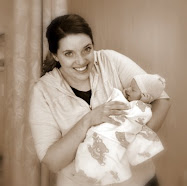
My name is Natalie. I am a wife, a mother of almost five boys, a doula, and a Hypnobabies Instructor! I'm passionate about childbirth and hope to help women realize the power that is in them to birth more normally and naturally. It's my goal to help women feel confident and comfortable during pregnancy, labor, and delivery. Yes, it is possible! It's also amazing, incredible, wonderful, empowering, and life changing.

As a doula, I am a trained professional who understands and trusts the process of birth. I provide continuous care for the laboring mother and her partner. Studies have shown that when doulas attend births, labors are shorter with fewer complications. I attend to women in labor to help ensure a safe and satisfying birth experience in both home and hospital settings. I draw on my knowledge and experience to provide emotional support, physical comfort and, as needed, communication with the other members of your birth team to make sure that you have the information that you need to make informed decisions in labor. I can provide reassurance and perspective to the laboring mother and her partner, make suggestions for labor progress, and help with relaxation, massage, positioning and other techniques for comfort.

Feel free to contact me at doulanataliesue@gmail.com.
Thanks for stopping by!

Pages

Friday, March 29, 2013

My Birth Plan/Preferences


Ladd and Natalie’s Birth Preferences

Thank you for participating and assisting in this exciting event. We are thrilled to have a third child join our family and have greatly anticipated and prepared for this day. 
I wanted to make a list of my labor and birth preferences, so that you can get to know me and the style that I desire to labor and birth my baby today.
I will be using a program called “Hypnobabies” which uses self hypnosis to relax me and keep me focused. My room will have music, relaxation tracks, and the aroma of essential oils. I have also brought along my family to support me through this major event.  Here are a few things that are important to me.

Monitoring: I would like to have intermittent monitoring, with the possibility of being in different positions while I’m monitored. As long as external monitoring is sufficient, this is all I prefer.

Hydration: I do not want to be on a continuous IV. I will keep hydrated with clear fluids. A saline-lock is negotiable

Pain Relief: My goal is to have a low-intervention birth. I do not wish to have an epidural or other pain relievers. My birth team will help me by providing other comfort measures. Please do not offer me any medication. I know it is there and will request it if I need to. I’d prefer to not use drugs/pitocin to stimulate my labor.

Pushing: Since I will be going epidural-free, I would like to push when I feel the urge. If I need help, I will ask for coaching, but otherwise, I’d like to push on my own at my own time. Obviously my midwife can help and make suggestions as needed. I may also change positions while pushing to find ways that are most comfortable. I do not want an episiotomy. I appreciate hands helping to hold my baby and guide him, but my previous babies have slid out quite quickly, so I feel that my baby will not need to be assisted out.

Emergency: If any emergency arises, I want my husband to be with me at all times. I will also choose to have an epidural/spinal block, and not general anesthesia. I would like my husband to be able to take photos and videos of the birth. I want my baby on my chest as soon as possible, even if I’ve had a cesarean. My baby is to remain with me as long as there are no complications. Baby can stay on my skin as we recover, or in the room with me and my husband.

Baby Care:
·         -Please allow the cord to stop pulsating before it is clamped.
·         -When the time comes, my husband will be willing to cut the cord.
·        - Please allow me to birth my placenta on my own and on my own time. Please do not pull the cord.
·       - I’d like my baby to be put immediately on my chest after birth.
·        - Please take vitals and check APGAR while baby is on my chest
·        - No shots. No vitamin K nor Hep b shots. Vitamin K can be re-evaluated if baby had a traumatic birth.
·         -No eye ointment, please
·         -Baby is to stay in my arms if there are no complications.
·         -I have brought my own towels and blankets for my baby, and would like to dry him off myself.
·         -I want to start breastfeeding as soon as possible. Weighing and footprints can be taken later.
·         -Baby will be rooming in with me.
·         -No pacifiers or bottles of any kind.
·        - If my baby needs assistance in other ways, such as precautions taken for the occurrence of meconium, as soon as baby is suctioned and stable, I want him naked, on my chest. No other procedures, before I get to hold him.

If there are any questions or anything that needs to be discussed with me, please let me know. Again, thank you for the great job that you do and for being here with us at this special time.
Ladd and Natalie 

Wednesday, March 27, 2013

Can breast milk cure an eye infection?


Can breast milk cure an eye infection?

eyeOne of the many healing properties attributed to breast milk is the ability to cure eye infections such as ‘pink eye’ – conjunctivitis – or ‘sticky eye’ – a gooey discharge that often accompanies conjunctival inflammation. Conjunctivitis is a common condition that rarely requires treatment, usually clearing up by itself within a week or two. For newborns, however, it can occasionally be quite serious, so ensuring it is properly treated is very important. For everyone else, it can be irritating and unpleasant, so any way of reducing the length of the infection is naturally welcome. Can breast milk really provide any relief?
A study in a hospital in New Delhi, India, examined the effect that routinely applying colostrum to babies’ eyes had on the likelihood of them developing an eye infection1. On one hospital wing, mothers were asked to put a drop of colostrum in their babies’ eyes three times a day; on another wing, mothers were asked not to apply anything. The infection rate was much lower in the babies who received colostrum: only 3 out of 51 babies in this group (6%) developed an infection, compared to 26 out of 72 in the control group (35%).
At first glance, this seems like a convincing result for colostrum, but a closer examination of the figures indicates this isn’t necessarily the case. The normal neonatal eye infection rate recorded at the hospital was just over 5% – roughly the same as the one recorded in the colostrum group. Rather than infection rates going down in the babies who received colostrum, it seems they went up – considerably – in those who didn’t. This may have occurred because the normal practice of wiping eyes with a sterile swab just after birth was abandoned during the study. Fewer babies in the study group may have got infections simply because their eyes were rinsed, not necessarily because it was with colostrum.
There is other evidence that breast milk could help ease the symptoms of conjunctivitis, however: in vitro tests show that colostrum, and to a much lesser extent mature breast milk, can potentially combat some of the bacteria known to cause neonatal eye infections2,3, and another study provides evidence that it does seem to be an effective treatment for eye infections in young babies4. At a hospital in Spain, babies diagnosed with neonatal sticky eye were treated either with antibiotics or breast milk. Babies treated with breast milk generally recovered much faster: 26 out of 45 (57%) of those receiving milk had recovered after 30 days, compared with 3 out of 20 (15%) of those receiving antibiotics. Whilst this does not provide conclusive evidence that breast milk is the optimal treatment for eye infections in newborns, the study’s results were deemed sufficiently encouraging to switch from antibiotic drops to breast milk at the hospital where it took place.
So does this limited evidence that breast milk can treat some neonatal eye infections mean it can be used to treat infections in older children, or even adults? Whether breast milk would have a beneficial effect is not clear: its antibacterial properties mean that it may help to clear up an infection caused by certain types of bacteria, but not necessarily one resulting from an allergy or a virus. Having said this, there is, of course, no harm in trying the breast milk option. If you’re currently nursing, it’s simple and free, and whilst it may not get rid of the symptoms, it almost certainly won’t make them any worse.
  1. J Trop Pediatr. 1982 Feb;28(1):35-7.
  2. J Trop Pediatr. 1996 Dec;42(6):327-9.
  3. J Reprod Immunol. 1998 Jul;38(2):155-67.
  4. J Trop Pediatr. 2007 Feb;53(1):68-9.

Thursday, March 21, 2013

C-Sections and VBACs: Why our lack of choice matters

http://www.nj.com/parenting/index.ssf/2013/03/post_21.html

Our decisions as parents often begin even before the baby is born. I was thinking about this very idea as I read that the most common elective surgery in the United States is now the Caesarean-Section. Note that the word “elective” is used quite liberally. In sad irony, when a Tampa woman refused to go to the hospital for an elective, scheduled Caesarean-Section, her doctor threatened to call the police to force her to have this elective surgery.
When I had my first two daughters, I never thought of a C-Section as "elective" surgery. Perhaps this is because I was told I didn’t have a choice. Our first child was breech. My obstetrician advised a breech babies must be delivered surgically. Our second child was a repeat C-Section. My doctor advised I would have difficulty finding a provider who would agree to a vaginal birth after a C-Section.
As a highly educated person, I found that I was highly uneducated on my options and rights. I didn’t know I could have a breech baby vaginally. I didn’t know there were providers in NJ who encourage VBACS (Vaginal Births After C-Sections). There was so much misinformation and so much judgment. People talked to me about safety and unnecessary risk. I didn’t know what was true. I decided to do my own research into what research existed. The only thing I was certain of was a compelling force inside that wanted the opportunity to give birth as nature had intended. I wanted a chance to tap into the power of one of the most powerful experiences life has to offer. I wanted a choice, some control, and some respect. At 38 weeks pregnant with our third child, I didn’t want a third scheduled C-Section. I found myself crying at the kitchen table telling my husband what this all meant to me and that I feared not trying for a VBAC would be a life-long regret.

My husband agreed to explore these options with me. We learned that the chances of something going wrong in a VBAC were almost exactly identical to the risks of a repeat C-Section. We learned that a C-Section brought an increased risk for respiratory issues, jaundice, and other complications. Ultimately, we decided to try for a VBAC. I am eternally grateful to the Hackettstown Midwives, Dr. David Garfinkel, and the staff at Morristown Hospital for their care.
Some people may wonder what the big deal is about. If you have a healthy baby then so what? Some women even choose a C-Section. That's fine. I’m not against C-Sections. Sometimes they are extremely necessary. Rather, I support choice and sensitivity. I don’t think cost, convenience, insurance companies, and my doctor or hospital’s fear of a lawsuit should dictate such a personal decision. How our children enter this world effects us as mothers. It impacts our families. Parents should have more say about what is best for their family with regard to risk, recovery time, and other relevant issues.

After surgery, I was even told to consider myself lucky I avoided the pain of birth. For anyone who’s missed out on having a c-section, try walking around with a constant feeling like you have been sawed in half. I felt like a botched magic-trick. I was then told I couldn’t exercise, vacuum, drive a car, walk long flights of stairs, or lift anything heavier than my infant for six weeks. With a toddler at home, three dogs to walk, and a household to run, that restriction lasted eighteen hours before I gave in. Personally, after 29 hours of unmedicated labor with my third child, I would choose the experience of naturally working through contractions to 10cm again over a C-Section.
In modern times, it is concerning that this issue remains so embryonic (no pun intended) .Many physicians and hospitals still prohibit VBACs. VBAC home births are still illegal. We live in a country where you can electively have your nose broken to reshape it, inject fat from your butt into your face to look younger, but pushing a baby out of your own vagina can be restricted. I can only imagine if men gave birth how there would be more convenience and choice.
I am interested to hear your birth experience and how it shaped you? How did your control or lack thereof effect your life? 

Tuesday, February 26, 2013

How Fathers Benefit from Hiring a Doula


How Fathers Benefit from Hiring a Doula

How Fathers Benefit from Hiring a Doula
There is no doubt that hiring a doula will benefit the laboring mother in numerous ways, as research has shown that with a doula there are shorter labors, less interventions, lowered chance of having a caesarean section, and increased maternal bonding in the months following childbirth. (DONA, 2001)  However, it is not always clear how hiring a doula will benefit the father during the process. Doulas are experts in the area of pain management and emotional support for birthing mothers, but they are also trained to support any family members and fathers who are present. A doula can benefit a father by being present in the birthing room and thus contribute to a positive birthing experience for the whole family. Father’s nowadays are involved in the birthing experience more than they ever have been, and having a doula present can allow them to experience it with confidence. (DONA, 2001)
 According to Marshall H. Klaus, John H. Kennell, and Phyllis H. Klaus, authors of “The Doula Book”, doulas and fathers occupy two different roles. Fathers are there because of the emotional bond and their personal attachment that they share with the mother and the new baby. Doulas, on the other hand, do not have that invested relationship with the mother or the baby. Although they do work to build a relationship, it is nothing like the relationship between the mother and her partner, or other family members. Doulas are birth professionals trained to manage pain, provide emotional support, provide information, be an advocate, and encourage and support the Mother AND the Father in their roles.
“We actually make demands on first-time fathers that exceed those made on medical students”(Klaus, Kennell, Klaus, 2002)
This statement is just one of the reasons a father would benefit from a doula. First-time fathers (and even 2ndor more time fathers) are often expected to do everything. They are expected to be the support, to be emotionally available, and to know exactly what to do at all times. However, this may be the first time they have ever had experience with childbirth, and a little guidance would be more than beneficial. A doula helps a father learn and determine what comfort measures will work for his partner. She will also allow opportunity for the father to provide more intimate support, as she will take on the physical work while the father connects emotionally with the mother.
Another skill that doulas typically possess is to know when to remove themselves from the space and let the mother and her partner connect. There are times when the father and mother may just want some time alone, and that is understandable, so the doula will step back and observe. Yet on the other hand, a doula will recognize when she is needed and she will then offer support
Penny Simkin, author of “The Birth Partner” and well known doula, childbirth educator, and physical therapist, provides a straightforward list of all the things a doula can do to help a father during childbirth.  The list includes:
-          Provide guidance
-          Offer breaks
-          Be the one to go get items for the mother, so that the father does not need to leave the room
-          Offer reassurance if the father is concerned about the mother’s well being
-          Explain what is happening with the labor to keep father always informed
-          Help the father participate more comfortably if he is at all nervous
-          Prior to the birth the doula will address any fears or concerns going in to the birthing experience
-          Can take photographs of the couple, the process, and new baby afterwards
Childbirth is one of the most transformational experiences a couple will go through. The amount of support that the couple receives can have invaluable effects on their perception and personal satisfaction with the birth process and life changes to follow. Hiring a doula that you are comfortable with and trust can benefit the mother, the father, and ultimately, the family as a whole.
Charlotte Sanchez CPM is a Certified Professional Midwife and
Childbirth Educator of over 20 years.
References:
DONA (2001). “Dads and Doulas: Key Players on Mother’s Support Team”,http://www.dona.org/PDF/DadsandDoulas.pdf
Klaus, M., Kennell, J. & Klaus, P., (2002).  The Doula Book: how a trained labor companion can help you have a shorter, easier, and healthier birth. Cambridge, Da Capo Press.
Simkin, P. (2008). The Birth Partner: A complete guide to childbirth for dads, doulas, and all other labor companions.  Boston, The Harvard Common Press.
http://www.pregnancybeat.com/how-fathers-benefit-from-hiring-a-doula/

Tuesday, January 15, 2013

VBAC and Uterine Scars

Here is a very good article!

http://vbacfacts.com/2009/01/17/predicting-uterine-rupture-via-sonogram-to-measure-uterine-thickness/

Wednesday, November 28, 2012

Sourcing stem cells from breast milk


http://www.abc.net.au/science/articles/2012/05/09/3469075.htm#artBookmarks
Stem cells discovered in human milk can turn into any kind of tissue, explains Dr Foteini Hassiotou.
By: Abbie Thomas

A solution to the ethical dilemma of using human embryonic stem cells to treat human diseases could be staring us in the face.Foteini Hassiotou
Dr Foteini Hassiotou (University of Western Australia)
Five years ago, Dr Foteini Hassiotou was part of a research team, the Hartmann Human Lactation Research Group at the University of Western Australia, which discovered that human breast milk contains what appear to be stem cells. These cells can potentially turn into many different types of cells, and offer staggering potential for treating a huge range of human diseases.
Hassiotou, the newest member of the group, found that some of these stem cells are very similar to embryonic stem cells — the most potent and useful stem cell of all.
"My work focuses on the different types of cells that are present in breast milk, and my interest is mostly in the stem cells," she says.
The chameleons of the body, embryonic stem cells can change into any type of cell, from neurones to nephrons, bladder tissue to heart muscle.
By regrowing failing organs and also delivering vaccines direct to diseased tissue, embryonic stem cells could treat heart failure, spinal injuries, diabetes and Parkinson's disease.
But there's a catch: to date, the only way to obtain embryonic stem cells has been to harvest them from a six-day-old human embryo, destroying a potential human life in the process.
"At the moment there are two main sources for stem cell therapies: stem cells from the bone marrow, or from umbilical cord blood," says Hassiotou.
These types of stem cells have a more restricted use: cord blood is specifically used to treat blood and immune disorders; and bone marrow is used to treat life-threatening blood disorders such as leukaemia and thalassaemia.
"Whereas breast milk can be accessed non-invasively, there's plenty of it, you don't have to do any surgery," she says.
"We've just started transplantation experiments and we've shown that they can differentiate into many different cell types outside the mammary lineage … we've turned them into bone cells, brain, liver, and pancreatic cells that produce insulin.
"I guess the next step would be to see how that would work in vivo, to see how these cells behave when they were injected into the animals."

Insights into breast cancer

Hassiotou says the lactating breast also provides an ideal model for understanding how breast cancer can develop.
During pregnancy, she says, the breast transforms itself into a milk producing organ with the help of stem cells. "There is a stem cell population in the breast that gets activated and has to multiply and then differentiates in order to remodel the breast."
She explains that some types of breast cancer are thought to be initiated by mammary stem cells: the normal breast stem cells get out of control, start to proliferate and give rise to cancer.
"Now with the lactating breast (by comparison), we also have a degree of cell proliferation where stem cells get activated and start multiplying, but they are under control.
"By comparing these two, we can understand what makes cells become out of control and how we can treat this."
One more radical idea emerges from this work: a new insight into the 'breast is best' debate.
"Since these stem cells are in the milk, and nothing exists without a purpose, I believe that they have a role for the baby. Since these cells can differentiate into all the different cell types, my hypothesis is that they may contribute to the baby's development early on, not only its immunity but also the development of the different tissues and organs."
"Now it's going to be about finding some results that prove that."

In Your Arms, Crying Heals the Hurt


In Your Arms, Crying Heals the Hurt

January 1, 2010

by Patty Wipfler, Hand in Hand Parenting
There are many things our babies and toddlers cry about that can be and should be fixed right away.  A diaper is taped too tight; a toy pinches a child’s finger; she is hungry; she has awakened and can’t see where you are.  We feel powerful as parents when our child’s cry alerts us to a situation we can remedy.  And our quick response is part of how an infant knows that she is important in our lives.  It always makes sense to respond to a crying child.  It always makes sense to run through your checklist of possible causes, and to fix what needs to be fixed.  And, of course, consult your physician if your child does not look like she is thriving, or if you notice some unusual condition, whether she is crying or not.
Sometimes, there’s nothing you can fix
But there are things our babies and toddlers cry about that we cannot fix. Babies cry about their gas pains, about having their diapers changed, and when they teethe.  Annoyances like these come with being a baby.  Our caring and attention is important while a child is going through this kind of minor trial, but, as we’ll explain below, full force fixing mode is not really required.  And then there are the things a baby objects to that pose no threat to her at all.  For instance, sometimes babies cry when we disappear into the shower, when a friendly stranger approaches, or when we put them down to crawl or walk.  Many babies develop a hatred of their car seat. Some parents decide to go for days without a shower, or to carry their baby all the time, in an effort to remedy this kind of crying.  Life gets harder, and parenting less enjoyable.  But when a baby cries about something that’s not actually threatening, or something that is an unavoidable annoyance, she’s engaged in a natural and important endeavor.  She’s having some feelings, and telling you about them.  She’s communicating that she doesn’t feel OK, at a time when things actually are as good as they can be.  This is the kind of time you can safely relax and listen.  Your child needs you close, relaxed, and unworried while she gives voice to her accumulated feelings of upset.  She just needs to tell you about the downside of life as a very young child.
Like you, your baby has feelings
However sunny your child’s life may be, she has had some experiences that have been painful, confusing, frightening, or sad.  Many times, your baby has good feelings and accurate perceptions:  “I’m warm and safe next to Mommy.”  “There’s my Daddy’s gentle voice. I’m loved!”  And at times, your child has had negative feelings or inaccurate perceptions:  “I’m alone in my bed. I can’t stand it.”  “Daddy left the room—I’m abandoned!”  “There is no safe person in the world except for Mommy.”  When babies and toddlers don’t feel good, they cry in order to clear the tension they feel.  We try to get them “settled down” with patting, bouncing, walking, pacifiers, and sometimes, the breast.  We’ve been trained to believe that a baby will do better as soon as she is able to stop expressing her upset.
In your arms, crying heals the hurt
However, you’ll see that when you stop a baby from expressing feelings, she doesn’t actually feel better. She will look distant and glazed.  She won’t be able to make eye contact.  When you try to engage her, she will begin to cry again.  This is a sign that her feelings are still on her mind.  She needs to tell you how she feels and soak in your loving attention before she can be in full contact with you again.
A child cries when he/she needs to release emotional stress.  When someone offers love and listens, crying heals the hurt.  While bad feelings are being cried away, your love and support get through.  Your caring fills cracks in your child’s confidence.  Learning how to support your child while she tells you her troubles can be one of the most empowering lessons of parenthood.
baby
It’s a lesson about the power you have to help your child overcome hardship.  When she’s fed, clean and close, yet she’s upset, then there’s some emotional thorn in her side.  Her system knows how to dislodge it.  All she needs is the safety of your arms, and the sweetness in your face and your voice to carry her through.  Once she has finished with her tears or tantrums, frightened trembling or yawning (which may occur in the middle of a good cry), she will relax.  She’ll gaze at you, untroubled, because you have filled a deep need.  You have connected with her.  You’ve listened and let her tell you, in her powerful nonverbal way, what was on her mind.  There’s nothing like being heard fully to settle a child’s mind, and help her feel loved.
Her mind clears
After a good cry, your baby will connect with you.  And she will thrive. I have known children to be loved through a long, passionate cry, and then to come forth with a flurry of new words, or with their first attempts to crawl, or with a new friendliness toward strangers.  Listening to feelings helps babies sleep more soundly, too.  These are the kinds of significant improvements in your child’s confidence and ability that your listening can foster.
Parents need a listener, too
This kind of listening is difficult for a parent to do.  It’s important not to try to take on the job alone.  Pair up with another parent, perhaps your spouse or a friend so that you get listening time for yourself.  For listening to the feelings of someone of any age opens the door for us to the most vulnerable side of a unique and important person.  We are inevitably moved, and our own feelings beg to be heard, and released.  A good laugh or a good cry with a friend refreshes our energy, and helps us feel less alone with the sacred trust and the hard work of loving our children well.