Welcome!

Welcome to my Doula Blog! I hope you find it interesting and informative.

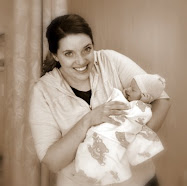
My name is Natalie. I am a wife, a mother of almost five boys, a doula, and a Hypnobabies Instructor! I'm passionate about childbirth and hope to help women realize the power that is in them to birth more normally and naturally. It's my goal to help women feel confident and comfortable during pregnancy, labor, and delivery. Yes, it is possible! It's also amazing, incredible, wonderful, empowering, and life changing.

As a doula, I am a trained professional who understands and trusts the process of birth. I provide continuous care for the laboring mother and her partner. Studies have shown that when doulas attend births, labors are shorter with fewer complications. I attend to women in labor to help ensure a safe and satisfying birth experience in both home and hospital settings. I draw on my knowledge and experience to provide emotional support, physical comfort and, as needed, communication with the other members of your birth team to make sure that you have the information that you need to make informed decisions in labor. I can provide reassurance and perspective to the laboring mother and her partner, make suggestions for labor progress, and help with relaxation, massage, positioning and other techniques for comfort.

Feel free to contact me at doulanataliesue@gmail.com.
Thanks for stopping by!

Pages

Tuesday, September 3, 2013

Why Are America’s Postpartum Practices So Rough on New Mothers?

Why Are America’s Postpartum Practices So Rough on New Mothers?

America is hyperfocused on mothers bouncing immediately back after childbirth, yet most other cultures allow for an extended period of pampering and rest. Hillary Brenhouse on why U.S. moms are missing out.
Some hundreds of years ago, Colonial Americans thought it fit for a woman who had just given birth to keep to her bed for three or four or more weeks. For the length of the “lying in” period, as it was called, the new mother would rest, regain her strength, and bond with the baby as her womanly attendants kept up the household. Several of these ladies would be relatives, and others not; none were paid, and all expected to be similarly cared for following their own deliveries. Then, in the 19th century, the last free land was settled, and everyone retired to her own room. As Richard and Dorothy Wertz write in Lying-In: A History of Childbirth in America, “The era of social childbirth, with its volunteer woman-to-woman help, passed with the disappearance of the American frontier.” The “lie-in” wasn’t adapted or modified. And it certainly wasn’t replaced with anything.
This country is one of the only utterly lacking in a culture of postpartum care. Some version of the lie-in is still prevalent all over Asia, Africa, the Middle East, and particular parts of Europe; in these places, where women have found the postpartum regimens of their own mothers and grandmothers slightly outdated, they’ve revised them. The U.S. seems only to understand pregnancy as a distinct and fragile state. For the expectant, we issue reams of proscriptions—more than can reasonably be followed. We tell them what to eat and what not to eat. We ask that they visit the doctor regularly and that they not do any strenuous activity. We give them our seats on the bus. Finally, once they’ve actually undergone the physical trauma of it, their bodies thoroughly depleted, we beckon them most immediately to rejoin the rest of us. One New York mother summed up her recent postpartum experience this way: “You’re not hemorrhaging? OK, peace, see you later.”
The Chinese traditionally adhere to 30 days of restful confinement—another week for a C-section—during which time moms are meant to consume lactation-inducing soups and herbal tonics and abstain from sex and cold water. In Mexico, the ritualized interlude, or thecuarentena, goes for 40 days, or long enough for the womb to return to its place. Balinese women are not allowed to enter the kitchen until the baby’s cord stump has fallen. Dutch maternity nurses make postpartum visits every day for the eight days after childbirth, and in France, as elsewhere, new moms spend nearly a week in hospital. Always, the mothers are educated as they convalesce; they’re taught to breast-feed, to manage baby rashes and bath time and sore nipples. Rarely are they first to respond to the infant’s shrieking. In 2011 I visited a luxury postpartum center in Taipei, where women of means (and who would rather not call on their mothers-in-law, as is custom) spend a month in recovery. When I asked Tsai Ya-hui, who had given birth to her first child three weeks earlier, what she did all day in her high-end suite, she answered: “Internet and sleep. That’s about it.” She looked more refreshed than I did.
There are elements of these postpartum practices (the consumption of foods rich in iron) that are common-sensical, and there are others (tightly wrapping the belly with a postnatal girdle; consuming distilled rice wine in place of water; extremely limited exposure to the sun in the first month), the usefulness and safety of which are debated by the medical community. But the thing to focus on here is the idea of a culturally recognized and accepted postpartum rest period. With these rituals comes an acknowledgment, familial and federal, that the woman needs relief more at this time than at any other—especially if she has a career to return to—and that it takes weeks, sometimes months, to properly heal from childbirth. An acknowledgement that overexertion after labor could lead to depression, infection, increased uterine bleeding, or prolapse. An acknowledgment that the postpartum stretch shouldn’t feel, as it did for so many of the American women who took part in my informal survey, like one long sleepless night.
“A culturally accepted postpartum period sends a powerful message that’s not being sent in this country,” said Dr. Margaret Howard, the director of the Day Hospital for Postpartum Depression in Providence, Rhode Island. “American mothers internalize the prevailing attitude—‘I should be able to handle this myself; women have babies every day’—and if they’re not up and functioning, they feel like there’s something wrong with them.” A colleague of Howard’s, the daughter of a pediatrician, brought her prepregnancy jeans to the delivery room, expecting to slip into them once the baby was out.
I spent part of an afternoon with some new mothers in Park Slope, an affluent Brooklyn neighborhood that is frequently and teasingly associated with over-the-top urban parenting. As a group, they’d received probably the best postpartum care that this country has to offer, which they detailed over the squeals and sighs of their nursing infants. Sophia Sotto had hired a postpartum doula, but didn’t feel comfortable “asking her to do the dishes in the sink.” She remembered: “I still couldn’t manage when to shower, when to eat.” Sarah Hake had an episiotomy and still, like every woman in America, was asked to come in for a 15-minute checkup six weeks after leaving the delivery room. “Six weeks is too late,” she said. The rest murmured their agreement. All had cooked; all had cleaned. Asked Emily Lillywhite, “If you don’t get up and do it, who will?” One woman had taken an especially long walk two days after delivering, because she wanted to “feel normal again.” Most had been afraid to survey the wreck between their legs, and those who did look hadn’t been able to tell if they were healing well or not. “Google became my very good friend,” said Ruth Margolis. “Yes,” Sotto broke in. “Your postpartum support is the Internet.”

Thursday, August 15, 2013

America's Postpartum Practices

130814-Brenhouse-postpartum-tease
Jaime Razuri/AFP/Getty

PARENTING

Why Are America’s Postpartum Practices So Rough on New Mothers?

America is hyperfocused on mothers bouncing immediately back after childbirth, yet most other cultures allow for an extended period of pampering and rest. Hillary Brenhouse on why U.S. moms are missing out.
Some hundreds of years ago, Colonial Americans thought it fit for a woman who had just given birth to keep to her bed for three or four or more weeks. For the length of the “lying in” period, as it was called, the new mother would rest, regain her strength, and bond with the baby as her womanly attendants kept up the household. Several of these ladies would be relatives, and others not; none were paid, and all expected to be similarly cared for following their own deliveries. Then, in the 19th century, the last free land was settled, and everyone retired to her own room. As Richard and Dorothy Wertz write in Lying-In: A History of Childbirth in America, “The era of social childbirth, with its volunteer woman-to-woman help, passed with the disappearance of the American frontier.” The “lie-in” wasn’t adapted or modified. And it certainly wasn’t replaced with anything.
This country is one of the only utterly lacking in a culture of postpartum care. Some version of the lie-in is still prevalent all over Asia, Africa, the Middle East, and particular parts of Europe; in these places, where women have found the postpartum regimens of their own mothers and grandmothers slightly outdated, they’ve revised them. The U.S. seems only to understand pregnancy as a distinct and fragile state. For the expectant, we issue reams of proscriptions—more than can reasonably be followed. We tell them what to eat and what not to eat. We ask that they visit the doctor regularly and that they not do any strenuous activity. We give them our seats on the bus. Finally, once they’ve actually undergone the physical trauma of it, their bodies thoroughly depleted, we beckon them most immediately to rejoin the rest of us. One New York mother summed up her recent postpartum experience this way: “You’re not hemorrhaging? OK, peace, see you later.”
The Chinese traditionally adhere to 30 days of restful confinement—another week for a C-section—during which time moms are meant to consume lactation-inducing soups and herbal tonics and abstain from sex and cold water. In Mexico, the ritualized interlude, or thecuarentena, goes for 40 days, or long enough for the womb to return to its place. Balinese women are not allowed to enter the kitchen until the baby’s cord stump has fallen. Dutch maternity nurses make postpartum visits every day for the eight days after childbirth, and in France, as elsewhere, new moms spend nearly a week in hospital. Always, the mothers are educated as they convalesce; they’re taught to breast-feed, to manage baby rashes and bath time and sore nipples. Rarely are they first to respond to the infant’s shrieking. In 2011 I visited a luxury postpartum center in Taipei, where women of means (and who would rather not call on their mothers-in-law, as is custom) spend a month in recovery. When I asked Tsai Ya-hui, who had given birth to her first child three weeks earlier, what she did all day in her high-end suite, she answered: “Internet and sleep. That’s about it.” She looked more refreshed than I did.
There are elements of these postpartum practices (the consumption of foods rich in iron) that are common-sensical, and there are others (tightly wrapping the belly with a postnatal girdle; consuming distilled rice wine in place of water; extremely limited exposure to the sun in the first month), the usefulness and safety of which are debated by the medical community. But the thing to focus on here is the idea of a culturally recognized and accepted postpartum rest period. With these rituals comes an acknowledgment, familial and federal, that the woman needs relief more at this time than at any other—especially if she has a career to return to—and that it takes weeks, sometimes months, to properly heal from childbirth. An acknowledgement that overexertion after labor could lead to depression, infection, increased uterine bleeding, or prolapse. An acknowledgment that the postpartum stretch shouldn’t feel, as it did for so many of the American women who took part in my informal survey, like one long sleepless night.
“A culturally accepted postpartum period sends a powerful message that’s not being sent in this country,” said Dr. Margaret Howard, the director of the Day Hospital for Postpartum Depression in Providence, Rhode Island. “American mothers internalize the prevailing attitude—‘I should be able to handle this myself; women have babies every day’—and if they’re not up and functioning, they feel like there’s something wrong with them.” A colleague of Howard’s, the daughter of a pediatrician, brought her prepregnancy jeans to the delivery room, expecting to slip into them once the baby was out.
I spent part of an afternoon with some new mothers in Park Slope, an affluent Brooklyn neighborhood that is frequently and teasingly associated with over-the-top urban parenting. As a group, they’d received probably the best postpartum care that this country has to offer, which they detailed over the squeals and sighs of their nursing infants. Sophia Sotto had hired a postpartum doula, but didn’t feel comfortable “asking her to do the dishes in the sink.” She remembered: “I still couldn’t manage when to shower, when to eat.” Sarah Hake had an episiotomy and still, like every woman in America, was asked to come in for a 15-minute checkup six weeks after leaving the delivery room. “Six weeks is too late,” she said. The rest murmured their agreement. All had cooked; all had cleaned. Asked Emily Lillywhite, “If you don’t get up and do it, who will?” One woman had taken an especially long walk two days after delivering, because she wanted to “feel normal again.” Most had been afraid to survey the wreck between their legs, and those who did look hadn’t been able to tell if they were healing well or not. “Google became my very good friend,” said Ruth Margolis. “Yes,” Sotto broke in. “Your postpartum support is the Internet.”
“It took me a good eight to nine weeks to be normal—I mean, physically able to not wear disposable underwear. But you’re supposed to be Facebook-ready two days after labor.”
I heard stories of women vacuuming upon arriving home after a day and a half in the hospital; of new moms waiting until the six-week checkup to make their postnatal complications known; of visitors turning up and instantly asking for coffee; of lactation consultants who were meant to, but did not, take insurance; of a postpartum doula who, when she was summoned by a mother one month postlabor, said, “You’re too far along to need me.” A popular site that advises women on how to find and work with a baby nurse counsels: “Ask your baby nurse what she likes to eat and stock up at the supermarket.” It is true that hiring a postpartum helper is far less expensive in, say, Hong Kong than in the U.S. But the problem is not one of money. The problem is that no one recognizes the new mother as a recuperating person, and she does not see herself as one. For the mourning or the injured, we will activate a meal tree. For the woman who is torturously fatigued, who has lost one 10th of her body’s blood supply, who can scarcely pee for the stiches running up her perineum, we will not.
A number of things have changed since the American frontier closed: women work outside the home, and the U.S. is the only industrialized nation not to mandate paid maternal leave; families are geographically scattered; childbirth has become medicalized, and medical treatment, costly. Still, immigrants to the U.S. and their children have found ways to observe a period of postpartum repose. There is, in Flushing, Queens, more than one Chinese confinement center, and the institutions run a fairly brisk business. I met with an Argentine woman, Andreina Botto, who kept some version of the cuarentena for two straight months. A South American nanny looked after her other children and prepared endless batches of fatty soups for Botto to sup. Botto was visited weekly by a Chinese doctor ($150 per rather lengthy visit), and by his instruction stayed in her pajamas most days, made sure to keep warm, and consumed fish oil. She sure didn’t diet; she ate in order to lactate and froze the excess milk.
If Botto hadn’t been able to afford hired postnatal help, she would have called on a family member. If her relatives had been outside the city and unable to make the trip in, she would have called on a friend. Full-time jobs are no impediment. In her book The Immigrant Advantage, Claudia Kolker visits a new mom, a Mexican woman living in Ohio, whose sister-in-law would come straight from the factory to administer care. For weeks, as the woman relaxed, her sister-in-law barely slept. This kind of arrangement is far from ideal, but, for those who subscribe to a system of postpartum support, the alternative isn’t an option. “In an airplane crash,” Botto said, “you need to put the mask on yourself first, not your kids. Only then can you be a good mother, a good wife. First you need to take care of yourself and recover. It’s key that in this 40 days you heal—it’s not like you can do it later.”
Put the mask on yourself first? In the States, a woman is looked after, by herself and by others, only so long as her body is a receptacle for the baby. Attention then transfers to the needs of the infant. To ask for respite is to betray not only weakness and helplessness, but selfishness. You should be prepared for the emotional and physical demands of your new motherly role and you should like them, too. “People are always asking, ‘Do you love it? Is it everything you dreamed?’” Brigita Jones, a new mom, told me. “Actually it sucks right now. But other women would be horrified if you said that; even the ones who’ve been through it. I was shredded after giving birth. The hospital flung me out. I had a colicky baby with feeding issues, and I had to take care of myself, which you can’t do when you’re not sleeping. It took me a good eight to nine weeks to be normal—I mean, physically able to not wear disposable underwear. But you’re supposed to be Facebook-ready two days after labor.”
America might begin by conceding that the postnatal period ought to be a formal, protected, well-monitored term and that any woman who does not adequately and restfully observe it is putting herself and her infant at risk. Increased paid parental leave and insurance policies that include longer hospital stays and regular postnatal visits would be helpful. So would a national discourse that does not stop at postpartum depression, which is the consequence and not the cause. Perhaps if we started talking about the time and energy it actually takes to recuperate from childbirth, women wouldn’t feel the need to return as quickly as possible to “normal.” A number of things have changed since the frontier closed, but the female body is not one of them.

Thursday, July 25, 2013

An Ideal Birth Story!

http://www.foodmatters.tv/articles-1/we-had-a-baby-and-here-is-our-unusual-story


By James Colquhoun, Filmmaker Food Matters &Hungry For Change

For those following us on online and onFacebook (nearly 300k, thank you!!!) you might have seen Laurentine's pregnant belly over the past few months. Well we recently had our baby and we wanted to share our unique story with you. I think you'll find it interesting commentary on birth and the beginnings of life as a human.

I call this an unusual story because it is not the typical hospital style birth that dominates our culture. 

Ever since Laurentine and I first met at college at 1999 (yes we're college sweethearts!) we would joke about starting a family and having lots of kids running around. We did however feel deep down inside that there was some important work calling us before we did so which is indeed what happened.

That work was to become the FOOD MATTERS film which helped heal my father from chronic fatigue syndrome, depression and anxiety plus free him from the pharmaceutical drug bandwagon. Then more recently HUNGRY FOR CHANGE which chronicled our experience with helping my father keep his weight off and covers many of the challenges that most people face when trying detoxes and fad diets. This has cemented our belief in the innate healing capacity of the human body and has influenced our opinions on health, life and birth in a deep and lasting way.

The Mind and The Body Need To Be Ready For Conception

Late last year we knew it was time for us to start a family so we prepared our bodies (both of us, you can't get away with this guys!) most importantly focusing on detoxification and rejuvenating our bodies plus balancing our hormones (testosterone, progesterone and oestrogen in particular). We first tried to conceive in Amsterdam when we were there on a 6 week trip writing the Hungry For Change book and visiting Laurentine's European family. Even though we had our bodies in order it didn't happen right away.

After we returned to the US and settled into our new home in Santa Monica Laurentine and I felt that much more 'nested' and conception happened immediately. There was obviously a part of us that needed to feel like we were home (or had a home base) before her body wished to conceive. I have no scientific data on this but can imagine that you might understand why this could be so.

"We had our inner biological terrain ready but we needed to have our mind's dialed in."

During the gestation period we were eating well and supporting the baby's development as best we knew how (there is a lot of info on this which we can save for another time). In preparation for the birth we consulted many of the experts from the films plus other leading experts and we developed some interesting rituals to help welcome this baby into the world. One of the more interesting ones we loved was making baby feel welcomed, expected and accepted.

You Are Welcomed, You Are Loved, You Are Accepted!

We would say this on a daily basis to baby as we knew this was important in making baby feel welcomed and loved, to develop a strong connection to our voices (which they can connect with from the 3rd  trimester onwards) and to aid in a speedy postpartum connection. This work is backed by Bruce Lipton (author of Biology Of Belief) and helps connect with the baby's subconscious mind in early life.

As for the actual birth and labour process Laurentine and I held the very strong belief that...

Birth Is A Natural Process And Not A Medical Emergency

We of course appreciate that there is no place like a hospital when the safety of mom and baby is compromised and you need emergency critical care however we believed that everything should be allowed to progress as naturally as possible for as long as possible before any intervention (if at all).

This being the case we opted for a home birth with two midwives and a doula. We worked with the famous birth centre in Los Angeles, California as featured in Ricki Lake's documentaries 'The Business of Being Born' and 'More Business of Being Born'. This clinic resonated with our beliefs about how birth should be and it had the professionals to back them up.

We did a lot of preparation and education leading up to the birth, so that we would understand as much about the birth process and postpartum period as we could as this was OUR birth and we knew that we were the ones playing a big part in this.

Laurentine's Water Broke At 7am on Sunday the 7th of the 7th

I'm not one for numerology but this is certainly interesting :) The team was called in and they came to the house setting up a birthing pool (blow up jacuzzi) and with all their midwife medical accoutrements. Laurentine's contractions were getting stronger and stronger and she quickly dilated to 7cm in a few hours.

Part of our team and planning was to have a hypnotherapist as our doula at the birth.

She Was In A Hypnotic Trance For Most Of The Birth

In between contractions we would count her down into hypnosis (which we had been training for over a few months) which brought the pain down dramatically and increased the pleasure of the early stages of labor before the transition and pushing stages.

As the labor progressed, baby had turned and was not in an ideal position facing head towards her left leg and slightly upwards (posterior) despite the fact he had been in a perfect backwards facing (anterior) position for months leading up to the birth. Typically this is a much more painful birth as the back of the baby's head (hard part) is rubbing against the mothers lower spine (ouch!) and in a traditional hospital environment would call for an episiotomy (slicing the mother's vagina to anus to make more room) and sucking the baby out with a vacuum or a caesarian section.

Given that we wanted to do all we could naturally we had some other options up our sleeve.

We Called A Chiropractor In Mid-Labor To Turn The Baby!

Our midwives made a call to a local chiropractor who was a specialist in pre-natal care. It was Sunday at around 2pm and he made the trip out to Santa Monica from Hollywood just for us!

He was a 6 foot something giant of a man and a welcomed sight :) He began deep tissue massage around the hips, back and spine and although Laurentine was mid-labor and fully dilated she was in total ecstasy for 2 hours as he worked on her and baby.

He worked with her through contractions helping her to surrender and allow baby to fully relax. He also adjusted her hips (sounded like an AK-47 firing rounds on first twist!) and literally massaged baby and then he flipped! He turned into a near perfect anterior (face backwards) position (although still a little facing left). It was an amazing thing to witness and experience and after he was done you could see the baby in her belly lined up straight like a marching soldier ready to visit us!

Baby Turned And Was Ready For Transition

Transition and pushing took a while as he came closer to this world and the team worked with her to guide her through certain positions until we found ourselves on the birthing stool (like a chair with no bottom) in the meditation room overlooking the ocean ready for him to come (don't tell our landlord, apparently they didn't even let the last owners have a cat! haha).
As he came closer I moved from behind Laurentine to the front so that I could catch the baby as this was what we had wanted. His head came out and cleared to his neck as I cupped his head in my hands and whispered to him: you are welcomed, loved and accepted... upon hearing my voice he immediately opened his eyes and it was the most divine experience I have ever had in my entire life (now's the time to cry if you feel so inclined...)

His body then quickly emerged and I caught him in my hands and it was a BOY!

I held him briefly before passing him to Laurentine to place on her chest and connect the parental bond and help to kick in the oxytocin (love hormone). The birth happened at 7:54pm on Sunday the 7th of the 7th and the placenta was birthed at 8pm. He was named Hugo Colquhoun shortly thereafter.

We Kept The Placenta Connected For About 3 Hours

This is because there is approximately 600ml of blood still in the placenta at birth which continues to be pumped to the baby helping to support his transition and immunity. Most hospitals clamp immediately after birth and then cut the cord however only after about 3 hours did we eventually clamp and then I also got to cut the cord (it's a unique rubber texture for those wondering).

We had the clinics OBGYN visit the house todo a final check. Dr Stewart Fischbein is a renegade OB who after years in the medical profession is fighting women's rights to VBAC's - vaginal birth after c-section and is one of the last remaining docs who delivers breached babies and twins vaginally. He is the author of the book 'Fearless Pregnancy' and is featured in 'More Business of Being Born'.

Everyone eventually left the house at around 1am and we proceeded to get some sleep (2-3 hours) before I had to wake up and stick to a commitment I made to a national TV show which had been booked months in advance. I got up at 5am and headed to the burbank studios of Access Hollywood for a segment on Hungry For Change where...

I Announced The Birth To My Parents On National Television!


After this set I drove straight home and bubba was still making his transition into the world and slowly learning to suckle and feed. We called our lactation consultant (Kimberly The Amazing!) and she helped but recommended some cranial-sacral therapy to help dial in the baby's spine and nervous system and bring him more into his body.

Baby Had Cranial-Sacral Body Work Done Within The First 48 Hours!

It was amazing to see the results after his muscles, bones and nerves were gently helped into optimal positioning. You could see his eyes, mouth and suckling reflexes come in fast and he really found his way after this simple and effective treatment.He went straight on the boob and has been sucking like a champion since. There is no doubt he would have developed this over time however this really did help to speed things up and allow his body to come into natural alignment after the birth faster.

After 3 days baby was looking strong but as the oxytocin high (remember the love hormone I mentioned earlier) started wearing off we were so lucky that...

We Decided To Encapsulate The Placenta To Supplement After Birth

Did you know that most mammals eat their placenta after birth (minus dolphins of course as it gets lost in the water... bummer!) and that this natural process is thought to help to tell the body that the baby is out and to contract the uterus, increase milk supply and balance the mom's hormones.

One of the midwives took the placenta after birth, dehydrated it then blended it into a powder and encapsulated it. On day 3 after the birth when I first started noticing the symptoms of postpartum moodiness or depression at its infancy the capsules arrived and almost immediately after taking them Laurentine was on high for hours and feeling like superwoman! 

She has been in incredible spirits ever since and very present for the connection with baby in these early days and especially her traditional Eastern postpartum treatment of...

Uterus Massage And Belly Binding

In Ayurvedic and Eastern traditions the belly becomes cold after birth as there has been a big transition from the heat of having a baby in there. These traditions suggest warming Ayurvedic foods, rest, massage and belly binding to help contract the uterus and bring the organs back into position as safely and quickly as possible. There is a local lady (called Princess none the less) who visits us every two days for twenty days to assist in this process along with a healing meditation during the massage.

On top of all of this there is one other important thing we don't do...

We Don't Clean Our Baby

In the first week (and we'll likely continue for up to a month) we are not using any soaps or products on his body (except for a little coconut oil on his bum to stop his poo sticking). This is because the vernix (protective coating) and other healthy bacteria (if the mom's ecology is in tact during pregnancy and birth - see Donna Gates' Body Ecology Diet for more info on this) are protective to his immune system and overall health. We think of this process along with colostrum, breast milk, sunlight exposure, and vaginal fluid from birth inoculating the baby's stomach all make part of his very own unique immunization and healthy start to this world.

We when speak to family, friends and any media about our birth experience they are often a little shocked to hear about how unorthodox it all was. But in hearing about the success we had (and the comparable birth this would have been in a hospital environment) they feel such options should be at least made available to all women giving birth.

We Believe Our Unconventional Birth Story Should Be The Norm! Do You?

Thank you all for your support over the past years (since 2007) with the Food Matters and Hungry For Change films and the movement we have made together to open up options for health and healing outside of the mainstream medical paradigm. We felt your support with us during this birth and look forward to continuing to share all that we discover over the coming months and years with more films, books and articles. We love what we do and we love helping share these important lifesaving messages with the world.

Please share with us below your thoughts on our story, any comments you might have or questions that are coming up in reading this. We love hearing from you. 

Additionally we wish to acknowledge that every family's birth experience can vary dramatically however we believe that any style of birth can be a miraculous and and spiritual experience.

To be continued...

In good health,

James and Laurentine  

Thursday, May 9, 2013

Selfish Women and Their Silly Birth Experiences


This is not a post about natural birth.  Just keep reading.

When I was preparing to give birth, I saw it as a once-in-a-lifetime event and something I wanted, more than anything, to do “right.”  By doing it “right,” I meant that I wanted the safest and most positive outcome possible; to me, it was perfectly obvious that safety and a good experience were inextricably linked.  And, as the person playing the most active role in the event, I felt it was my responsibility to shape those things.

It was a little alarming to me that so many of my friends and acquaintances who had given birth did not particularly want to talk about it, and didn’t necessarily think it was a good idea that I learned as much as I could about it before doing it.

Before and after giving birth, I got the sense from some people that in seeking a “positive” experience, I was being high-maintenance and was somehow less concerned with my baby’s well-being than someone who didn’t ask questions or want to actively participate.  I rolled my eyes at the speculation and barreled right through it, but, on reflection, it struck me as odd.  How could it be “selfish” to do what I could to facilitate a less traumatic birth?  Didn’t less traumatic mean “safer”?  My body—a body I’d come to know and like for the last 30-some years—was being subjected to a major, life-altering process.  Why did it suddenly have such reduced value?  Why was I suddenly not supposed to have any say over what happened to it?

And . . . why did people assume that my baby’s safety must be lower on my priority list, because I wanted his birth to be a positive experience? 


That’s a doozy of an assumption.


Prior to giving birth, my primary motivations for attempting a normal, unmedicated, physiologic birth were so that my baby wouldn’t be born with drugs in his system; so that we could benefit from the dance of hormones science hasn’t come close to replicating; and so we could avoid the dreaded “cascade of interventions” that ends in 1 in 3 American babies being born by surgery.  All of these things meant healthier bodies, better bonding, and a higher chance of successful breastfeeding.  That was selfish?

When I first began researching birth and options, I went in completely biased against unmedicated birth (why would anyone choose pain?), but what I found didn’t support my bias.  I found, to my complete surprise, that it was possible to give birth with dignity and humanity, and that, on the whole, those births seemed to be the least medically risky.  Over and over again, I saw that the births where women were supported in the process rather than managed like children–where mom was treated by her skilled, attentive providers as the most important person in the room–the smoother the birth and the safer the baby.  Bingo.

Choices in birth are very personal.  I do not believe that every woman should, must, or can have a physiologic birth.  That fact does not change a word that I write here.

It was only after I gave birth that I grasped the real value of what I instinctively wanted.  I’m not sure I knew it then, but my tendency toward a physiologic birth was me protecting myself and my baby.  But the bigger picture is that if birth were merely a day or two out of our lives, I wouldn’t have gone on to devote my time to this cause.  Birth carries a much bigger impact than a one-time mere medical event.

Birth is valuable because it is the beginning of the mother-baby relationship.


Once you have been a mother, you will never not be a mother again.  The minute you go into labor, you are on a rollercoaster that doesn’t stop.

The way you meet your baby can very much set the tone for the postpartum period.  It is a tough time.  You’re unsure of yourself, on no sleep, hoping you don’t accidentally harm or starve this helpless, completely dependent little thing. The stress of a baby crying for no discernable reason is indescribable.  I don’t recall ever feeling so frustrated in my life.  We all laugh about those moments of irrationality, when you have to place your baby in her crib and walk away in order to keep your sanity.

I have seen first-hand how the birth experience impacts this time.  I came off my baby’s birth strengthened and confident—in complete awe of what my body had done.  And it was still the most difficult time I’ve ever had.  I’ve seen what happens when women come off a traumatic birth, too, and I’ve seen the lack of spirit and the helplessness they sometimes exhibit.  I’ve talked to the women who spent hours crying in the basement or listless in bed, unable to get it together, or just dragging through the day with no joy.  Even the women who rally and carry on are carrying wounds they must wrestle with at some point or another.

When I say “traumatic birth,” I’m not talking about medical complications. I’m talking largely about healthy women with realistic expectations who were treated disrespectfully or without compassion at that most vulnerable time: women who weren’t treated like the most important person in the room, as they gave birth to the most important thing in the world.

Feelings of desperation, low spirits, and worse plague a new mother and affect how she nurtures her baby.  We’ve only begun to explore the connection between birth experiences and incidences of postpartum depression or post-traumatic stress disorder in new moms.  Coming off birth strengthened and supported is invaluable to mom and baby.

Something we forget is that you are already a mother during birth.  Birth and postpartum are your relationship with your baby as a new mom.  The quality of that time is something you will remember all your life.  Saying that what happens with you and your baby during and after birth doesn’t matter is the same as saying it doesn’t matter whether you bond with your toddler or that it doesn’t matter whether your teenager hates you.  Birth is part of your life as a mother.  This is your life.

Birth is valuable because women matter.


It’s a dangerous assumption I alluded to above: that only a woman who doesn’t care about her baby would care about her body and her birth.  It’s damaging and wrong to communicate to women that we must make a choice between ourselves and our babies, because we can’t both matter.

Acting as if a baby’s safety is compromised by treating his mother well in birth is ludicrous, and I’d like to call for an end to that.  If I could go back in time, I’d ask those people who questioned me to please explain how I was the most important factor in pregnancy and the least important in birth.  How my value as a person deserving of positive experiences plummeted so dramatically when I crossed the threshold from pregnant woman to woman in labor.  And how on earth treating my body well in pregnancy was intuitive, but treating my body well in birth was not.

I’d say to those people, “Explain to me again how it’s selfish to take my responsibility as a mother seriously?”

Simply by virtue of being human beings, women matter.  We deserve respect, compassion, and kindness in birth, because we are human beings.  But let’s not forget that greatest of responsibilities given to us as mothers: we are guardians of our babies.  In pregnancy and birth, what happens to us happens to our babies.  And because the ways in which our children come into the world are some of our first acts as mothers, our babies deserve for us to be treated as if we matter.

I encourage you to embrace that truth, and act as if you mean it.
 _________________________
Cristen Pascucci is Vice President of ImprovingBirth.org.She is a political and communications strategist, and writes professionally.Contact her here to inquire about those services.