Welcome!

Welcome to my Doula Blog! I hope you find it interesting and informative.

My name is Natalie. I am a wife, a mother of almost five boys, a doula, and a Hypnobabies Instructor! I'm passionate about childbirth and hope to help women realize the power that is in them to birth more normally and naturally. It's my goal to help women feel confident and comfortable during pregnancy, labor, and delivery. Yes, it is possible! It's also amazing, incredible, wonderful, empowering, and life changing.

As a doula, I am a trained professional who understands and trusts the process of birth. I provide continuous care for the laboring mother and her partner. Studies have shown that when doulas attend births, labors are shorter with fewer complications. I attend to women in labor to help ensure a safe and satisfying birth experience in both home and hospital settings. I draw on my knowledge and experience to provide emotional support, physical comfort and, as needed, communication with the other members of your birth team to make sure that you have the information that you need to make informed decisions in labor. I can provide reassurance and perspective to the laboring mother and her partner, make suggestions for labor progress, and help with relaxation, massage, positioning and other techniques for comfort.

Feel free to contact me at doulanataliesue@gmail.com.
Thanks for stopping by!

Pages

Thursday, May 9, 2013

Selfish Women and Their Silly Birth Experiences


This is not a post about natural birth.  Just keep reading.

When I was preparing to give birth, I saw it as a once-in-a-lifetime event and something I wanted, more than anything, to do “right.”  By doing it “right,” I meant that I wanted the safest and most positive outcome possible; to me, it was perfectly obvious that safety and a good experience were inextricably linked.  And, as the person playing the most active role in the event, I felt it was my responsibility to shape those things.

It was a little alarming to me that so many of my friends and acquaintances who had given birth did not particularly want to talk about it, and didn’t necessarily think it was a good idea that I learned as much as I could about it before doing it.

Before and after giving birth, I got the sense from some people that in seeking a “positive” experience, I was being high-maintenance and was somehow less concerned with my baby’s well-being than someone who didn’t ask questions or want to actively participate.  I rolled my eyes at the speculation and barreled right through it, but, on reflection, it struck me as odd.  How could it be “selfish” to do what I could to facilitate a less traumatic birth?  Didn’t less traumatic mean “safer”?  My body—a body I’d come to know and like for the last 30-some years—was being subjected to a major, life-altering process.  Why did it suddenly have such reduced value?  Why was I suddenly not supposed to have any say over what happened to it?

And . . . why did people assume that my baby’s safety must be lower on my priority list, because I wanted his birth to be a positive experience? 


That’s a doozy of an assumption.


Prior to giving birth, my primary motivations for attempting a normal, unmedicated, physiologic birth were so that my baby wouldn’t be born with drugs in his system; so that we could benefit from the dance of hormones science hasn’t come close to replicating; and so we could avoid the dreaded “cascade of interventions” that ends in 1 in 3 American babies being born by surgery.  All of these things meant healthier bodies, better bonding, and a higher chance of successful breastfeeding.  That was selfish?

When I first began researching birth and options, I went in completely biased against unmedicated birth (why would anyone choose pain?), but what I found didn’t support my bias.  I found, to my complete surprise, that it was possible to give birth with dignity and humanity, and that, on the whole, those births seemed to be the least medically risky.  Over and over again, I saw that the births where women were supported in the process rather than managed like children–where mom was treated by her skilled, attentive providers as the most important person in the room–the smoother the birth and the safer the baby.  Bingo.

Choices in birth are very personal.  I do not believe that every woman should, must, or can have a physiologic birth.  That fact does not change a word that I write here.

It was only after I gave birth that I grasped the real value of what I instinctively wanted.  I’m not sure I knew it then, but my tendency toward a physiologic birth was me protecting myself and my baby.  But the bigger picture is that if birth were merely a day or two out of our lives, I wouldn’t have gone on to devote my time to this cause.  Birth carries a much bigger impact than a one-time mere medical event.

Birth is valuable because it is the beginning of the mother-baby relationship.


Once you have been a mother, you will never not be a mother again.  The minute you go into labor, you are on a rollercoaster that doesn’t stop.

The way you meet your baby can very much set the tone for the postpartum period.  It is a tough time.  You’re unsure of yourself, on no sleep, hoping you don’t accidentally harm or starve this helpless, completely dependent little thing. The stress of a baby crying for no discernable reason is indescribable.  I don’t recall ever feeling so frustrated in my life.  We all laugh about those moments of irrationality, when you have to place your baby in her crib and walk away in order to keep your sanity.

I have seen first-hand how the birth experience impacts this time.  I came off my baby’s birth strengthened and confident—in complete awe of what my body had done.  And it was still the most difficult time I’ve ever had.  I’ve seen what happens when women come off a traumatic birth, too, and I’ve seen the lack of spirit and the helplessness they sometimes exhibit.  I’ve talked to the women who spent hours crying in the basement or listless in bed, unable to get it together, or just dragging through the day with no joy.  Even the women who rally and carry on are carrying wounds they must wrestle with at some point or another.

When I say “traumatic birth,” I’m not talking about medical complications. I’m talking largely about healthy women with realistic expectations who were treated disrespectfully or without compassion at that most vulnerable time: women who weren’t treated like the most important person in the room, as they gave birth to the most important thing in the world.

Feelings of desperation, low spirits, and worse plague a new mother and affect how she nurtures her baby.  We’ve only begun to explore the connection between birth experiences and incidences of postpartum depression or post-traumatic stress disorder in new moms.  Coming off birth strengthened and supported is invaluable to mom and baby.

Something we forget is that you are already a mother during birth.  Birth and postpartum are your relationship with your baby as a new mom.  The quality of that time is something you will remember all your life.  Saying that what happens with you and your baby during and after birth doesn’t matter is the same as saying it doesn’t matter whether you bond with your toddler or that it doesn’t matter whether your teenager hates you.  Birth is part of your life as a mother.  This is your life.

Birth is valuable because women matter.


It’s a dangerous assumption I alluded to above: that only a woman who doesn’t care about her baby would care about her body and her birth.  It’s damaging and wrong to communicate to women that we must make a choice between ourselves and our babies, because we can’t both matter.

Acting as if a baby’s safety is compromised by treating his mother well in birth is ludicrous, and I’d like to call for an end to that.  If I could go back in time, I’d ask those people who questioned me to please explain how I was the most important factor in pregnancy and the least important in birth.  How my value as a person deserving of positive experiences plummeted so dramatically when I crossed the threshold from pregnant woman to woman in labor.  And how on earth treating my body well in pregnancy was intuitive, but treating my body well in birth was not.

I’d say to those people, “Explain to me again how it’s selfish to take my responsibility as a mother seriously?”

Simply by virtue of being human beings, women matter.  We deserve respect, compassion, and kindness in birth, because we are human beings.  But let’s not forget that greatest of responsibilities given to us as mothers: we are guardians of our babies.  In pregnancy and birth, what happens to us happens to our babies.  And because the ways in which our children come into the world are some of our first acts as mothers, our babies deserve for us to be treated as if we matter.

I encourage you to embrace that truth, and act as if you mean it.
 _________________________
Cristen Pascucci is Vice President of ImprovingBirth.org.She is a political and communications strategistand writes professionally.Contact her here to inquire about those services.

Tuesday, May 7, 2013

Dads and Doulas


Doulas from the Dad’s Perspective

Thanks to my husband, Kit, for sharing his thoughts about doulas from a father’s perspective.
She’s gone quiet. She was excited, and now she’s serious. Which signpost was this? Does this mean she’s close? Now she’s quiet. She’s never quiet. WHAT DOES THIS MEAN? How do I help her? I remember that Sears book. Barely. It mentioned something about helping with the pain. What was it? I don’t remember!
Sound familiar, Dad? This was me once upon a time. Scattered, a little bit panicked, and unsure of what to do or where to go or what Heidi was going to need next.
To be clear, the idea of being a superdad really appeals to me. I want to be my wife’s hero, supporting her exactly as she needs during her labor. But let’s face it, there’s a ton of stuff going on, and pretty much none of it is even remotely within your control. So the question remains, what can you do to best support your wife?
It turns out it was pretty simple for me. Just focus on her. Keep near. Hold her when she needs it. Let her hang on me. Look in her eyes when transition comes. Let her know she can do it and that she’s not alone. But what about the other stuff?
That’s where our doula came in. What the heck does a doula do, anyway? Turns out, doulas are versatile and handy to have around. With a little bit of planning, they come prepared to help you with pretty much whatever you need during your labor.
We discussed Heidi’s hopes and dreams with our doula well before Heidi’s due date came. Labor positions, coping techniques, all those sorts of things were noted, catalogued, and planned for.
While we were in the zone, running straight into transition, focusing on getting the baby here, our doula was able to remember everything that fell away. “Try walking.” “Get off your side.” You’re looking shaky, here’s some juice.” And Heidi and I were able to focus on the moment.
Our doula was our spare brain. Our brains were otherwise singularly occupied with getting Heidi through labor. We were forgetting things, but that’s okay. We had our doula. She freed us from the minutae of labor and let us just be in the moment.
I can’t stress how much having a doula helped me, as a husband, support my wife better. The weird part for me was to realize that superdad could be a superhusband by asking for a little help. Our doula was worth every penny of her fee.
Heidi is now a doula herself, helping moms and dads have their perfect births. Friends ask how that’s working for us, me having to drop everything to stay home with the kids so Heidi can go and help out with a birth. It’s no sacrifice. Our doula was so effective during our birth, I kind of feel it’s my duty to now help Heidi be that for some other couple. I love that Heidi is able to be a doula. I believe in the power of doulas. For birthing parents, Doulas can make all the difference in the world.
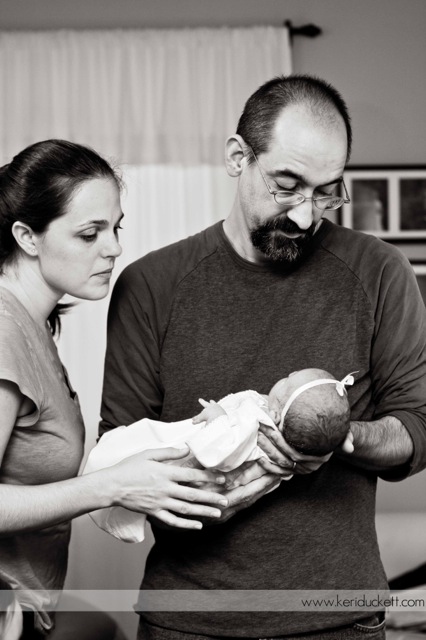
The photo is Kit and our doula just after our sixth baby arrived. The day we found out we were expecting my husband asked me to call our doula to get on her schedule! To learn more about doula services click here.
This entry was posted in BirthDadsDoulas and tagged . Bookmark thepermalink.

Thursday, April 18, 2013

Cosleeping


http://neuroanthropology.net/2008/12/21/cosleeping-and-biological-imperatives-why-human-babies-do-not-and-should-not-sleep-alone/

Cosleeping and Biological Imperatives: Why Human Babies Do Not and Should Not Sleep Alone

Posted by dlende on December 21, 2008
mother-and-childBy James J. McKenna Ph.D.
Edmund P. Joyce C.S.C. Chair in Anthropology
Director, Mother-Baby Behavioral Sleep Laboratory
University of Notre Dame
Author of Sleeping with Your Baby: A Parent’s Guide to Cosleeping
Where a baby sleeps is not as simple as current medical discourse and recommendations against cosleeping in some western societies want it to be. And there is good reason why. I write here to explain why the pediatric recommendations on forms of cosleeping such as bedsharing will and should remain mixed. I will also address why the majority of new parents practice intermittent bedsharing despite governmental and medical warnings against it.
Definitions are important here. The term cosleeping refers to any situation in which a committed adult caregiver, usually the mother, sleeps within close enough proximity to her infant so that each, the mother and infant, can respond to each other’s sensory signals and cues. Room sharing is a form of cosleeping, always considered safe and always considered protective. But it is not the room itself that it is protective. It is what goes on between the mother (or father) and the infant that is. Medical authorities seem to forget this fact. This form of cosleeping is not controversial and is recommended by all.
Unfortunately, the terms cosleeping, bedsharing and a well-known dangerous form of cosleeping, couch or sofa cosleeping, are mostly used interchangeably by medical authorities, even though these terms need to be kept separate. It is absolutely wrong to say, for example, that “cosleeping is dangerous” when roomsharing is a form of cosleeping and this form of cosleeping (as at least three epidemiological studies show) reduce an infant’s chances of dying by one half.
Bedsharing is another form of cosleeping which can be made either safe or unsafe, but it is not intrinsically one nor the other. Couch or sofa cosleeping is, however, intrinsically dangerous as babies can and do all too easily get pushed against the back of the couch by the adult, or flipped face down in the pillows, to suffocate.
Often news stories talk about “another baby dying while cosleeping” but they fail to distinguish between what type of cosleeping was involved and, worse, what specific dangerous factor might have actually been responsible for the baby dying. A specific example is whether the infant was sleeping prone next to their parent, which is an independent risk factor for death regardless of where the infant was sleeping. Such reports inappropriately suggest that all types of cosleeping are the same, dangerous, and all the practices around cosleeping carry the same high risks, and that no cosleeping environment can be made safe.
Nothing can be further from the truth. This is akin to suggesting that because some parents drive drunk with their infants in their cars, unstrapped into car seats, and because some of these babies die in car accidents that nobody can drive with babies in their cars because obviously car transportation for infants is fatal. You see the point.
One of the most important reasons why bedsharing occurs, and the reason why simple declarations against it will not eradicate it, is because sleeping next to one’s baby is biologically appropriate, unlike placing infants prone to sleep or putting an infant in a room to sleep by itself. This is particularly so when bedsharing is associated with breast feeding.
When done safely, mother-infant cosleeping saves infants lives and contributes to infant and maternal health and well being. Merely having an infant sleeping in a room with a committed adult caregiver (cosleeping) reduces the chances of an infant dying from SIDS or from an accident by one half!
Research
In Japan where co-sleeping and breastfeeding (in the absence of maternal smoking) is the cultural norm, rates of the sudden infant death syndrome are the lowest in the world. For breastfeeding mothers, bedsharing makes breastfeeding much easier to manage and practically doubles the amount of breastfeeding sessions while permitting both mothers and infants to spend more time asleep. The increased exposure to mother’s antibodies which comes with more frequent nighttime breastfeeding can potentially, per any given infant, reduce infant illness. And because co-sleeping in the form of bedsharing makes breastfeeding easier for mothers, it encourages them to breastfeed for a greater number of months, according to Dr. Helen Ball’s studies at the University of Durham, therein potentially reducing the mothers chances of breast cancer. Indeed, the benefits of cosleeping helps explain why simply telling parents never to sleep with baby is like suggesting that nobody should eat fats and sugars since excessive fats and sugars lead to obesity and/or death from heart disease, diabetes or cancer. Obviously, there’s a whole lot more to the story.
As regards bedsharing, an expanded version of its function and effects on the infant’s biology helps us to understand not only why the bedsharing debate refuses to go away, but why the overwhelming majority of parents in the United States (over 50% according to the most recent national survey) now sleep in bed for part or all of the night with their babies.
That the highest rates of bedsharing worldwide occur alongside the lowest rates of infant mortality, including Sudden Infant Death Syndrome (SIDS) rates, is a point worth returning to. It is an important beginning point for understanding the complexities involved in explaining why outcomes related to bedsharing (recall, one of many types of cosleeping) vary between being protective for some populations and dangerous for others. It suggests that whether or not babies should bedshare and what the outcome will be may depend on who is involved, under what condition it occurs, how it is practiced, and the quality of the relationship brought to the bed to share. This is not the answer some medical authorities are looking for, but it certainly resonates with parents, and it is substantiated by scores of studies.
Understanding Recommendations
Recently, the American Academy of Pediatrics (AAP) SIDS Sub-Committee for whom I served (ad hoc) as an expert panel member recommended that babies should sleep close to their mothers in the same room but not in the same bed. While I celebrated this historic roomsharing recommendation, I disagreed with and worry about the ramifications of the unqualified recommendation against any and all bedsharing. Further, I worry about the message being given unfairly (if not immorally) to mothers; that is, no matter who you are, or what you do, your sleeping body is no more than an inert potential lethal weapon against which neither you nor your infant has any control. If this were true, none of us humans would be here today to have this discussion because the only reason why we survived is because our ancestral mothers slept alongside us and breastfed us through the night!
mckenna-sleeping-with-your-babyI am not alone in thinking this way. The Academy of Breast Feeding Medicine, the USA Breast Feeding Committee, the Breast Feeding section of the American Academy of Pediatrics, La Leche League International, UNICEF and WHO are all prestigious organizations who support bedsharing and which use the best and latest scientific information on what makes mothers and babies safe and healthy. Clearly, there is no scientific consensus.
What we do agree on, however, is what specific “factors” increase the chances of SIDS in a bedsharing environment, and what kinds of circumstances increase the chances of suffocation either from someone in the bed or from the bed furniture itself. For example, adults should not bedshare if inebriated or if desensitized by drugs, or overly exhausted, and other toddlers or children should never be in a bed with an infant. Moreover, since having smoked during a pregnancy diminishes the capacities of infants to arouse to protect their breathing, smoking mothers should have their infants sleep alongside them on a different surface but not in the same bed.
My own physiological studies suggest that breastfeeding mother-infant pairs exhibit increased sensitivities and responses to each other while sleeping, and those sensitivities offers the infant protection from overlay. However, if bottle feeding, infants should lie alongside the mother in a crib or bassinet, but not in the same bed. Prone or stomach sleeping especially on soft mattresses is always dangerous for infants and so is covering their heads with blankets, or laying them near or on top of pillows. Light blanketing is always best as is attention to any spaces or gaps in bed furniture which needs to be fixed as babies can slip into these spaces and quickly to become wedged and asphyxiate. My recommendation is, if routinely bedsharing, to strip the bed apart from its frame, pulling the mattress and box springs to the center of the room, therein avoiding dangerous spaces or gaps into which babies can slip to be injured or die.
But, again, disagreement remains over how best to use this information. Certain medical groups, including some members of the American Academy of Pediatrics (though not necessarily the majority), argue that bedsharing should be eliminated altogether. Others, myself included, prefer to support the practice when it can be done safely amongst breastfeeding mothers. Some professionals believe that it can never be made safe but there is no evidence that this is true.
More importantly, parents just don’t believe it! Making sure that parents are in a position to make informed choices therein reflecting their own infant’s needs, family goals, and nurturing and infant care preferences seems to me to be fundamental.
Our Biological Imperatives
My support of bedsharing when practiced safely stems from my research knowledge of how and why it occurs, what it means to mothers, and how it functions biologically. Like human taste buds which reward us for eating what’s overwhelmingly critical for survival i.e. fats and sugars, a consideration of human infant and parental biology and psychology reveal the existence of powerful physiological and social factors that promote maternal motivations to cosleep and explain parental needs to touch and sleep close to baby.
The low calorie composition of human breast milk (exquisitely adjusted for the human infants’ undeveloped gut) requires frequent nighttime feeds, and, hence, helps explain how and why a cultural shift toward increased cosleeping behavior is underway. Approximately 73% of US mothers leave the hospital breast feeding and even amongst mothers who never intended to bedshare soon discover how much easier breast feeding is and how much more satisfied they feel with baby sleeping alongside often in their bed.
But it’s not just breastfeeding that promotes bedsharing. Infants usually have something to say about it too! And for some reason they remain unimpressed with declarations as to how dangerous sleeping next to mother can be. Instead, irrepressible (ancient) neurologically-based infant responses to maternal smells, movements and touch altogether reduce infant crying while positively regulating infant breathing, body temperature, absorption of calories, stress hormone levels, immune status, and oxygenation. In short, and as mentioned above, cosleeping (whether on the same surface or not) facilitates positive clinical changes including more infant sleep and seems to make, well, babies happy. In other words, unless practiced dangerously, sleeping next to mother is good for infants. The reason why it occurs is because… it is supposed to.
Recall that despite dramatic cultural and technological changes in the industrialized west, human infants are still born the most neurologically immature primate of all, with only 25% of their brain volume. This represents a uniquely human characteristic that could only develop biologically (indeed, is only possible) alongside mother’s continuous contact and proximity—as mothers body proves still to be the only environment to which the infant is truly adapted, for which even modern western technology has yet to produce a substitute.
Even here in whatever-city-USA, nothing a baby can or cannot do makes sense except in light of the mother’s body, a biological reality apparently dismissed by those that argue against any and all bedsharing and what they call cosleeping, but which likely explains why most crib-using parents at some point feel the need to bring their babies to bed with them —findings that our mother-baby sleep laboratory here at Notre Dame has helped document scientifically. Given a choice, it seems human babies strongly prefer their mother’s body to solitary contact with inert cotton-lined mattresses. In turn, mothers seem to notice and succumb to their infant’s preferences.
There is no doubt that bedsharing should be avoided in particular circumstances and can be practiced dangerously. While each single bedsharing death is tragic, such deaths are no more indictments about any and all bedsharing than are the three hundred thousand plus deaths or more of babies in cribs an indictment that crib sleeping is deadly and should be eliminated. Just as unsafe cribs and unsafe ways to use cribs can be eliminated so, too, can parents be educated to minimize bedsharing risks.
Moving Beyond Judgments to Understanding
We still do not know what causes SIDS. But fortunately the primary factors that increase risk are now widely known i.e. placing an infant prone (face down) for sleep, using soft mattresses, maternal smoking, overwrapping babies or blocking air movement around their faces. In combination with bedsharing, where more vital normal defensive infant responses and may be more important to an infant (like the ability to arouse to bat a blanket which momentarily falls to cover the infants face when its parent moves or turns) these risks become exaggerated especially amongst unhealthy infants. When infants die in these obviously unsafe conditions, it is here where social biases and the sheer levels of ignorance associated with actually explaining the death become apparent. A death itself in a bedsharing environment does not automatically suggest, as many legal and medical authorities assert, that it was the bedsharing, or worse, suffocation that killed the infant. Infants in bedsharirng environments, like babies in cribs, can still die of SIDS.
It is a shame and certainly inappropriate that, for example, the head pathologists of the state of Indiana recommends that other pathologists assume SIDS as a likely cause of death when babies die in cribs but to assume asphyxiation if a baby dies in an adult bed or has a history of “cosleeping”. By assuming before any facts are known from the pathologist’s death scene and toxicological report that any bedsharing baby was a victim of an accidental suffocation rather than from some congenital or natural cause, including SIDS unrelated to bedsharing, medical authorities not only commit a form of scientific fraud but they victimize the doomed infant’s parents for a third time. The first occurs when their baby dies, the second occurs when health professionals interviewed for news stories (which commonly occurs) imply that when a baby dies in a bed with an adult it must be due to suffocation (or a SIDS induced by bedsharing). The third time the parents are victimized is when still without any evidence medical or police authorities suggest that their baby’s death was “preventable,” that their baby would still be alive if only the parents had not bedshared. This conclusion is based not on the facts of the tragedy but on unfair and fallacious stereotypes about bedsharing.
Indeed, no legitimate SIDS researcher nor forensic pathologist should render a judgment that a baby was suffocated without an extensive toxiological report and death scene investigation including information from the mother concerning what her thoughts are on what might or could have happened.
Whether involving cribs or adult beds, risky sleep practices leading to infant deaths are more likely to occur when parents lack access to safety information, or if they are judged to be irresponsible should they choose to follow their own and their infants’ biological predilections to bedshare, or if public health messages are held back on brochures and replaced by simplistic and inappropriate warnings saying “just never do it.” Such recommendations misrepresent the true function and biological significance of the behaviors, and the critical extent to which dangerous practices can be modified, and they dismiss the valid reasons why people engage in the behavior in the first place.
For More Information:
A Popular Parenting Book
Sleeping with Your Baby: A Parent’s Guide to Cosleepingby James J.McKenna (2007). Platypus Press.
The Arm’s Reach Co-Sleeper- a bassinet/crib which Dr. McKenna has recommended as one way to enjoy close proximity with a baby for parents who are concerned about bed-sharing

The Scientific Perspective
McKenna, J., Ball H., Gettler L., Mother-infant Cosleeping, Breastfeeding and SIDS: What Biological Anthropologists Have Learned About Normal Infant Sleep and Pediatric Sleep Medicine. Yearbook of Physical Anthropology 50:133-161 (2007)

Friday, March 29, 2013

My Birth Plan/Preferences


Ladd and Natalie’s Birth Preferences

Thank you for participating and assisting in this exciting event. We are thrilled to have a third child join our family and have greatly anticipated and prepared for this day. 
I wanted to make a list of my labor and birth preferences, so that you can get to know me and the style that I desire to labor and birth my baby today.
I will be using a program called “Hypnobabies” which uses self hypnosis to relax me and keep me focused. My room will have music, relaxation tracks, and the aroma of essential oils. I have also brought along my family to support me through this major event.  Here are a few things that are important to me.

Monitoring: I would like to have intermittent monitoring, with the possibility of being in different positions while I’m monitored. As long as external monitoring is sufficient, this is all I prefer.

Hydration: I do not want to be on a continuous IV. I will keep hydrated with clear fluids. A saline-lock is negotiable

Pain Relief: My goal is to have a low-intervention birth. I do not wish to have an epidural or other pain relievers. My birth team will help me by providing other comfort measures. Please do not offer me any medication. I know it is there and will request it if I need to. I’d prefer to not use drugs/pitocin to stimulate my labor.

Pushing: Since I will be going epidural-free, I would like to push when I feel the urge. If I need help, I will ask for coaching, but otherwise, I’d like to push on my own at my own time. Obviously my midwife can help and make suggestions as needed. I may also change positions while pushing to find ways that are most comfortable. I do not want an episiotomy. I appreciate hands helping to hold my baby and guide him, but my previous babies have slid out quite quickly, so I feel that my baby will not need to be assisted out.

Emergency: If any emergency arises, I want my husband to be with me at all times. I will also choose to have an epidural/spinal block, and not general anesthesia. I would like my husband to be able to take photos and videos of the birth. I want my baby on my chest as soon as possible, even if I’ve had a cesarean. My baby is to remain with me as long as there are no complications. Baby can stay on my skin as we recover, or in the room with me and my husband.

Baby Care:
·         -Please allow the cord to stop pulsating before it is clamped.
·         -When the time comes, my husband will be willing to cut the cord.
·        - Please allow me to birth my placenta on my own and on my own time. Please do not pull the cord.
·       - I’d like my baby to be put immediately on my chest after birth.
·        - Please take vitals and check APGAR while baby is on my chest
·        - No shots. No vitamin K nor Hep b shots. Vitamin K can be re-evaluated if baby had a traumatic birth.
·         -No eye ointment, please
·         -Baby is to stay in my arms if there are no complications.
·         -I have brought my own towels and blankets for my baby, and would like to dry him off myself.
·         -I want to start breastfeeding as soon as possible. Weighing and footprints can be taken later.
·         -Baby will be rooming in with me.
·         -No pacifiers or bottles of any kind.
·        - If my baby needs assistance in other ways, such as precautions taken for the occurrence of meconium, as soon as baby is suctioned and stable, I want him naked, on my chest. No other procedures, before I get to hold him.

If there are any questions or anything that needs to be discussed with me, please let me know. Again, thank you for the great job that you do and for being here with us at this special time.
Ladd and Natalie 

Wednesday, March 27, 2013

Can breast milk cure an eye infection?


Can breast milk cure an eye infection?

eyeOne of the many healing properties attributed to breast milk is the ability to cure eye infections such as ‘pink eye’ – conjunctivitis – or ‘sticky eye’ – a gooey discharge that often accompanies conjunctival inflammation. Conjunctivitis is a common condition that rarely requires treatment, usually clearing up by itself within a week or two. For newborns, however, it can occasionally be quite serious, so ensuring it is properly treated is very important. For everyone else, it can be irritating and unpleasant, so any way of reducing the length of the infection is naturally welcome. Can breast milk really provide any relief?
A study in a hospital in New Delhi, India, examined the effect that routinely applying colostrum to babies’ eyes had on the likelihood of them developing an eye infection1. On one hospital wing, mothers were asked to put a drop of colostrum in their babies’ eyes three times a day; on another wing, mothers were asked not to apply anything. The infection rate was much lower in the babies who received colostrum: only 3 out of 51 babies in this group (6%) developed an infection, compared to 26 out of 72 in the control group (35%).
At first glance, this seems like a convincing result for colostrum, but a closer examination of the figures indicates this isn’t necessarily the case. The normal neonatal eye infection rate recorded at the hospital was just over 5% – roughly the same as the one recorded in the colostrum group. Rather than infection rates going down in the babies who received colostrum, it seems they went up – considerably – in those who didn’t. This may have occurred because the normal practice of wiping eyes with a sterile swab just after birth was abandoned during the study. Fewer babies in the study group may have got infections simply because their eyes were rinsed, not necessarily because it was with colostrum.
There is other evidence that breast milk could help ease the symptoms of conjunctivitis, however: in vitro tests show that colostrum, and to a much lesser extent mature breast milk, can potentially combat some of the bacteria known to cause neonatal eye infections2,3, and another study provides evidence that it does seem to be an effective treatment for eye infections in young babies4. At a hospital in Spain, babies diagnosed with neonatal sticky eye were treated either with antibiotics or breast milk. Babies treated with breast milk generally recovered much faster: 26 out of 45 (57%) of those receiving milk had recovered after 30 days, compared with 3 out of 20 (15%) of those receiving antibiotics. Whilst this does not provide conclusive evidence that breast milk is the optimal treatment for eye infections in newborns, the study’s results were deemed sufficiently encouraging to switch from antibiotic drops to breast milk at the hospital where it took place.
So does this limited evidence that breast milk can treat some neonatal eye infections mean it can be used to treat infections in older children, or even adults? Whether breast milk would have a beneficial effect is not clear: its antibacterial properties mean that it may help to clear up an infection caused by certain types of bacteria, but not necessarily one resulting from an allergy or a virus. Having said this, there is, of course, no harm in trying the breast milk option. If you’re currently nursing, it’s simple and free, and whilst it may not get rid of the symptoms, it almost certainly won’t make them any worse.
  1. J Trop Pediatr. 1982 Feb;28(1):35-7.
  2. J Trop Pediatr. 1996 Dec;42(6):327-9.
  3. J Reprod Immunol. 1998 Jul;38(2):155-67.
  4. J Trop Pediatr. 2007 Feb;53(1):68-9.

Thursday, March 21, 2013

C-Sections and VBACs: Why our lack of choice matters

http://www.nj.com/parenting/index.ssf/2013/03/post_21.html

Our decisions as parents often begin even before the baby is born. I was thinking about this very idea as I read that the most common elective surgery in the United States is now the Caesarean-Section. Note that the word “elective” is used quite liberally. In sad irony, when a Tampa woman refused to go to the hospital for an elective, scheduled Caesarean-Section, her doctor threatened to call the police to force her to have this elective surgery.
When I had my first two daughters, I never thought of a C-Section as "elective" surgery. Perhaps this is because I was told I didn’t have a choice. Our first child was breech. My obstetrician advised a breech babies must be delivered surgically. Our second child was a repeat C-Section. My doctor advised I would have difficulty finding a provider who would agree to a vaginal birth after a C-Section.
As a highly educated person, I found that I was highly uneducated on my options and rights. I didn’t know I could have a breech baby vaginally. I didn’t know there were providers in NJ who encourage VBACS (Vaginal Births After C-Sections). There was so much misinformation and so much judgment. People talked to me about safety and unnecessary risk. I didn’t know what was true. I decided to do my own research into what research existed. The only thing I was certain of was a compelling force inside that wanted the opportunity to give birth as nature had intended. I wanted a chance to tap into the power of one of the most powerful experiences life has to offer. I wanted a choice, some control, and some respect. At 38 weeks pregnant with our third child, I didn’t want a third scheduled C-Section. I found myself crying at the kitchen table telling my husband what this all meant to me and that I feared not trying for a VBAC would be a life-long regret.

My husband agreed to explore these options with me. We learned that the chances of something going wrong in a VBAC were almost exactly identical to the risks of a repeat C-Section. We learned that a C-Section brought an increased risk for respiratory issues, jaundice, and other complications. Ultimately, we decided to try for a VBAC. I am eternally grateful to the Hackettstown Midwives, Dr. David Garfinkel, and the staff at Morristown Hospital for their care.
Some people may wonder what the big deal is about. If you have a healthy baby then so what? Some women even choose a C-Section. That's fine. I’m not against C-Sections. Sometimes they are extremely necessary. Rather, I support choice and sensitivity. I don’t think cost, convenience, insurance companies, and my doctor or hospital’s fear of a lawsuit should dictate such a personal decision. How our children enter this world effects us as mothers. It impacts our families. Parents should have more say about what is best for their family with regard to risk, recovery time, and other relevant issues.

After surgery, I was even told to consider myself lucky I avoided the pain of birth. For anyone who’s missed out on having a c-section, try walking around with a constant feeling like you have been sawed in half. I felt like a botched magic-trick. I was then told I couldn’t exercise, vacuum, drive a car, walk long flights of stairs, or lift anything heavier than my infant for six weeks. With a toddler at home, three dogs to walk, and a household to run, that restriction lasted eighteen hours before I gave in. Personally, after 29 hours of unmedicated labor with my third child, I would choose the experience of naturally working through contractions to 10cm again over a C-Section.
In modern times, it is concerning that this issue remains so embryonic (no pun intended) .Many physicians and hospitals still prohibit VBACs. VBAC home births are still illegal. We live in a country where you can electively have your nose broken to reshape it, inject fat from your butt into your face to look younger, but pushing a baby out of your own vagina can be restricted. I can only imagine if men gave birth how there would be more convenience and choice.
I am interested to hear your birth experience and how it shaped you? How did your control or lack thereof effect your life? 

Tuesday, February 26, 2013

How Fathers Benefit from Hiring a Doula


How Fathers Benefit from Hiring a Doula

How Fathers Benefit from Hiring a Doula
There is no doubt that hiring a doula will benefit the laboring mother in numerous ways, as research has shown that with a doula there are shorter labors, less interventions, lowered chance of having a caesarean section, and increased maternal bonding in the months following childbirth. (DONA, 2001)  However, it is not always clear how hiring a doula will benefit the father during the process. Doulas are experts in the area of pain management and emotional support for birthing mothers, but they are also trained to support any family members and fathers who are present. A doula can benefit a father by being present in the birthing room and thus contribute to a positive birthing experience for the whole family. Father’s nowadays are involved in the birthing experience more than they ever have been, and having a doula present can allow them to experience it with confidence. (DONA, 2001)
 According to Marshall H. Klaus, John H. Kennell, and Phyllis H. Klaus, authors of “The Doula Book”, doulas and fathers occupy two different roles. Fathers are there because of the emotional bond and their personal attachment that they share with the mother and the new baby. Doulas, on the other hand, do not have that invested relationship with the mother or the baby. Although they do work to build a relationship, it is nothing like the relationship between the mother and her partner, or other family members. Doulas are birth professionals trained to manage pain, provide emotional support, provide information, be an advocate, and encourage and support the Mother AND the Father in their roles.
“We actually make demands on first-time fathers that exceed those made on medical students”(Klaus, Kennell, Klaus, 2002)
This statement is just one of the reasons a father would benefit from a doula. First-time fathers (and even 2ndor more time fathers) are often expected to do everything. They are expected to be the support, to be emotionally available, and to know exactly what to do at all times. However, this may be the first time they have ever had experience with childbirth, and a little guidance would be more than beneficial. A doula helps a father learn and determine what comfort measures will work for his partner. She will also allow opportunity for the father to provide more intimate support, as she will take on the physical work while the father connects emotionally with the mother.
Another skill that doulas typically possess is to know when to remove themselves from the space and let the mother and her partner connect. There are times when the father and mother may just want some time alone, and that is understandable, so the doula will step back and observe. Yet on the other hand, a doula will recognize when she is needed and she will then offer support
Penny Simkin, author of “The Birth Partner” and well known doula, childbirth educator, and physical therapist, provides a straightforward list of all the things a doula can do to help a father during childbirth.  The list includes:
-          Provide guidance
-          Offer breaks
-          Be the one to go get items for the mother, so that the father does not need to leave the room
-          Offer reassurance if the father is concerned about the mother’s well being
-          Explain what is happening with the labor to keep father always informed
-          Help the father participate more comfortably if he is at all nervous
-          Prior to the birth the doula will address any fears or concerns going in to the birthing experience
-          Can take photographs of the couple, the process, and new baby afterwards
Childbirth is one of the most transformational experiences a couple will go through. The amount of support that the couple receives can have invaluable effects on their perception and personal satisfaction with the birth process and life changes to follow. Hiring a doula that you are comfortable with and trust can benefit the mother, the father, and ultimately, the family as a whole.
Charlotte Sanchez CPM is a Certified Professional Midwife and
Childbirth Educator of over 20 years.
References:
DONA (2001). “Dads and Doulas: Key Players on Mother’s Support Team”,http://www.dona.org/PDF/DadsandDoulas.pdf
Klaus, M., Kennell, J. & Klaus, P., (2002).  The Doula Book: how a trained labor companion can help you have a shorter, easier, and healthier birth. Cambridge, Da Capo Press.
Simkin, P. (2008). The Birth Partner: A complete guide to childbirth for dads, doulas, and all other labor companions.  Boston, The Harvard Common Press.
http://www.pregnancybeat.com/how-fathers-benefit-from-hiring-a-doula/